
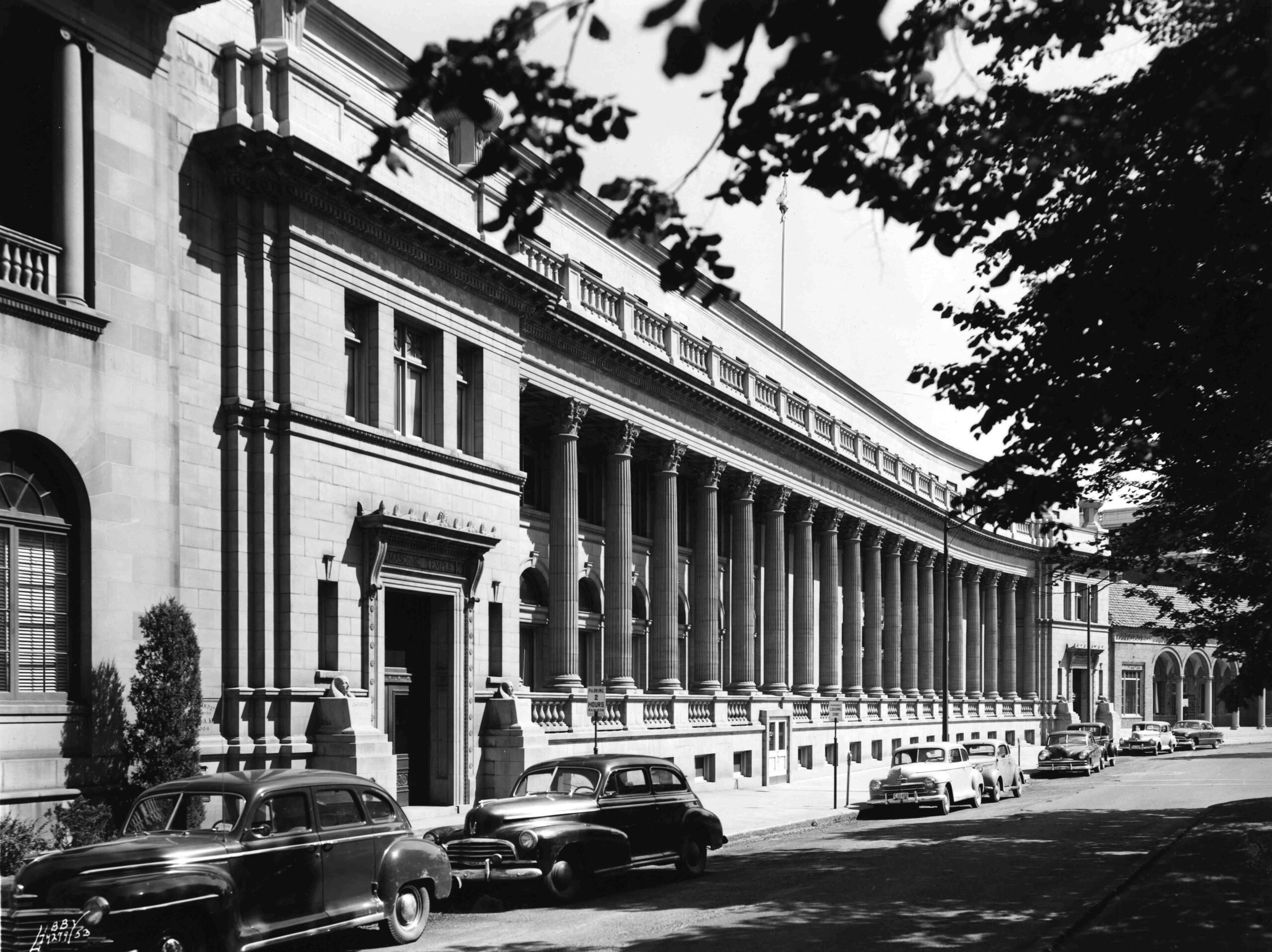
I have always been intrigued by the Masonic Temple on Riverside Avenue with its distinctive curve. It features 18 columns of the Corinthian Order. There are large entrance pavilions with double doors with carved Masonic emblems. Busts of Senenmut, an ancient Egyptian architect, guard the doorways. The temple is considered one of the grandest fraternal lodge buildings in the west and I can see why. It is immense and very impressive!
Masonic Temple History
The temple was originally constructed between 1903 and 1905 and is approximately 100 feet long across its face on Riverside Avenue. It was a collaborative effort by two prominent Spokane architects, John K. Dow and Loren L. Rand. When the building was finished, it was the largest meeting facility west of the Mississippi.
Both Dow and Rand were given equal credit for the design which is an example of the Neo-Classical Revival architectural style. It also exemplifies the classicism from the Beaux-Arts movement and the influences of the Columbian Exposition in 1893.
How befitting of such an elegant, classic building such as the Masonic Temple to be built by leading Spokane architects who were also Masons themselves.
The order of Masons traces its history back to medieval times when skilled craftsman were in demand to help construct the great cathedrals. They evolved into a social organization promoting brotherhood and humanitarian ideals. They donated to their communities, helped construct new buildings and repaired old ones. There were rules that had to be followed as well as expectations, a strong sense of community, and building human character all in keeping with their deep history spanning as far back as the 14th century.
Freemasons—as they are called—acknowledged their beginnings through the use of architectural symbols such as the compass, square, level, and plumb still in use today. The 17th century rise in popularity of fraternal societies in England and throughout the British Empire spread to America in the 1800s. An example is the Freemason’s Hall in London which was built in 1775. George Washington was the first of many presidents who held membership in the Freemason’s society.
Spokane was an unincorporated town of a few hundred people in the winter of 1880 when a group of local men gathered to organize the first Masonic Lodge. James Glover, the “Father of Spokane”, was one of the earliest members. Over the next ten years, several other Masonic groups were formed.
As a result of three years of successful fundraising, a parcel of land was purchased on Riverside Avenue for $5,400. A groundbreaking ceremony was held on May 26, 1903, in which President Theodore Roosevelt—also a Mason—turned the first shovel of earth. The temple was opened on August 24, 1905. At that time, membership had grown to over 1,200. Total expenses including the purchase of the land and the cost of interior furnishings was over $100,000.
The overwhelming growth of Spokane’s Masonic groups over the next two decades led to the purchase of additional land at a cost of $50,000 and the expansion in 1925 of the building which represented an investment of $300,000.
With so many different organizations using the temple, a large building was needed with various rooms for different purposes.
The temple reflected a harmonious progression and a unique configuration. It was already irregular to take advantage of the varying street depth. It assumed a curved shape when its façade was extended mirroring the crescent shape of Riverside Avenue.
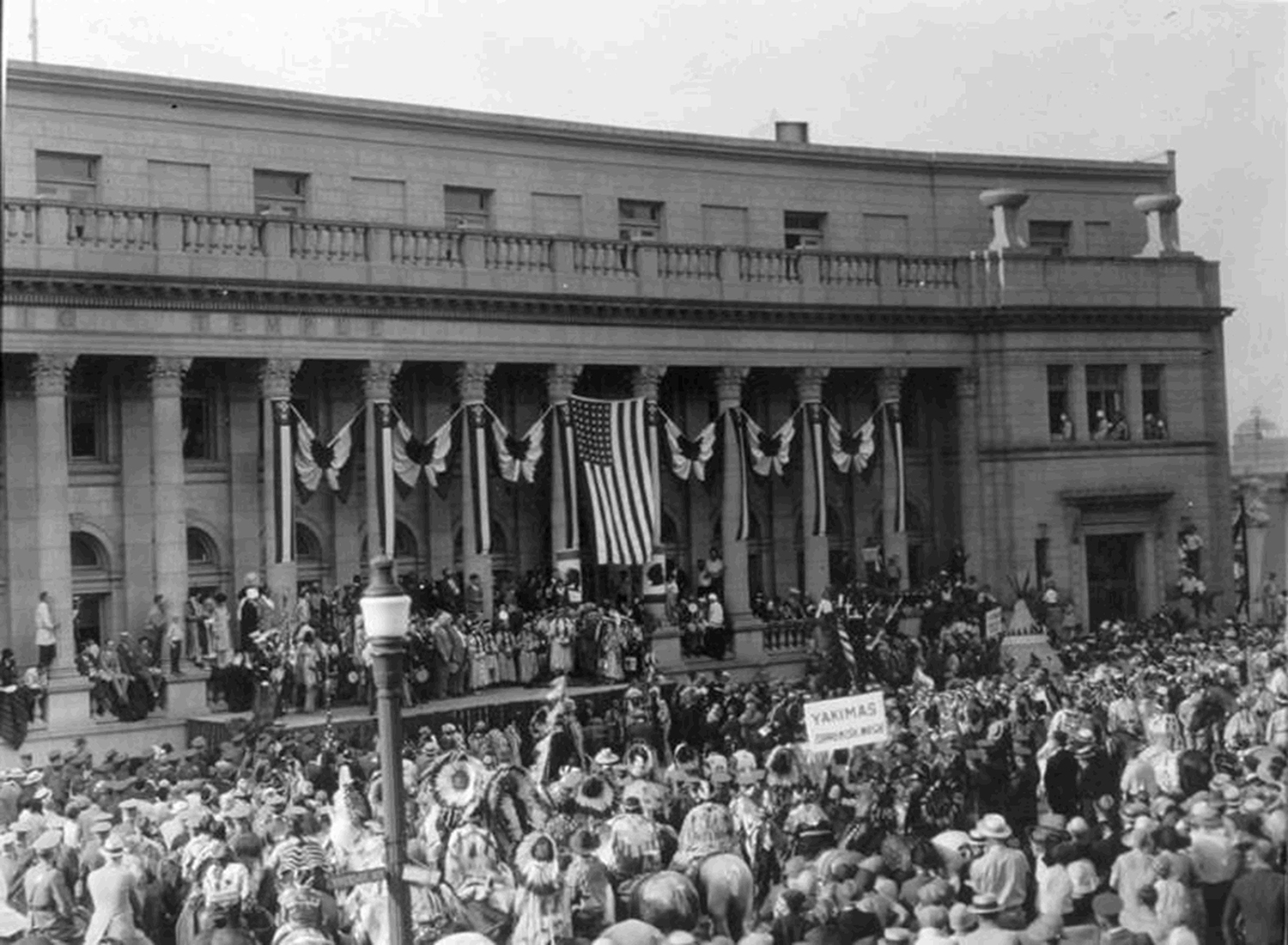
Since the building’s completion in 1905, it had been occupied by the Masonic Order and several affiliated fraternal men’s groups including the Spokane Lodge No. 34, Scottish Rite, York Rite, El Katif Shriners and such ladies’ groups as the Eastern Star and Ladies of the Nile.
During the 1920s and 1930s, fraternal organizations enjoyed unprecedented popularity in Spokane and nationwide. Spokane frequently was host to fraternal activities which drew visitors from around the country. In the 1930s the temple was the setting for school graduation ceremonies and touring theater companies.
Masonic Temple Symbol and Meaning
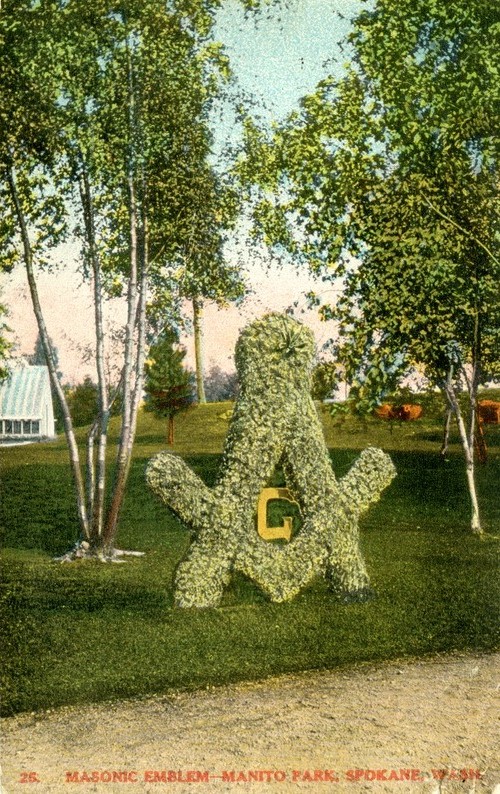
Masonic Temple symbols are rooted in medieval stonemasonry tools. They are designed to teach moral and ethical lessons and to remind members to lead virtuous lives. The symbols for the Spokane Lodge No. 34 include a Square, Compass, a “G”, and wings.
The Square is a layout measurement tool used in construction to mark 90-degree angles and 45-degree miter angles on materials. The Square stands for morality.
The Compass is a tool used by carpenters and tradesmen to scribe circles, arcs, and curves, divide lines into equal segments, and bisect angles for accurate layout. The Compass stands for spirituality.
Both the Square and the Compass represent the balance between actions and moral boundaries dating back to stonemason guilds.
The central “G” represents Geometry, fundamental to masonry, or God, the Great Architect of the Universe.
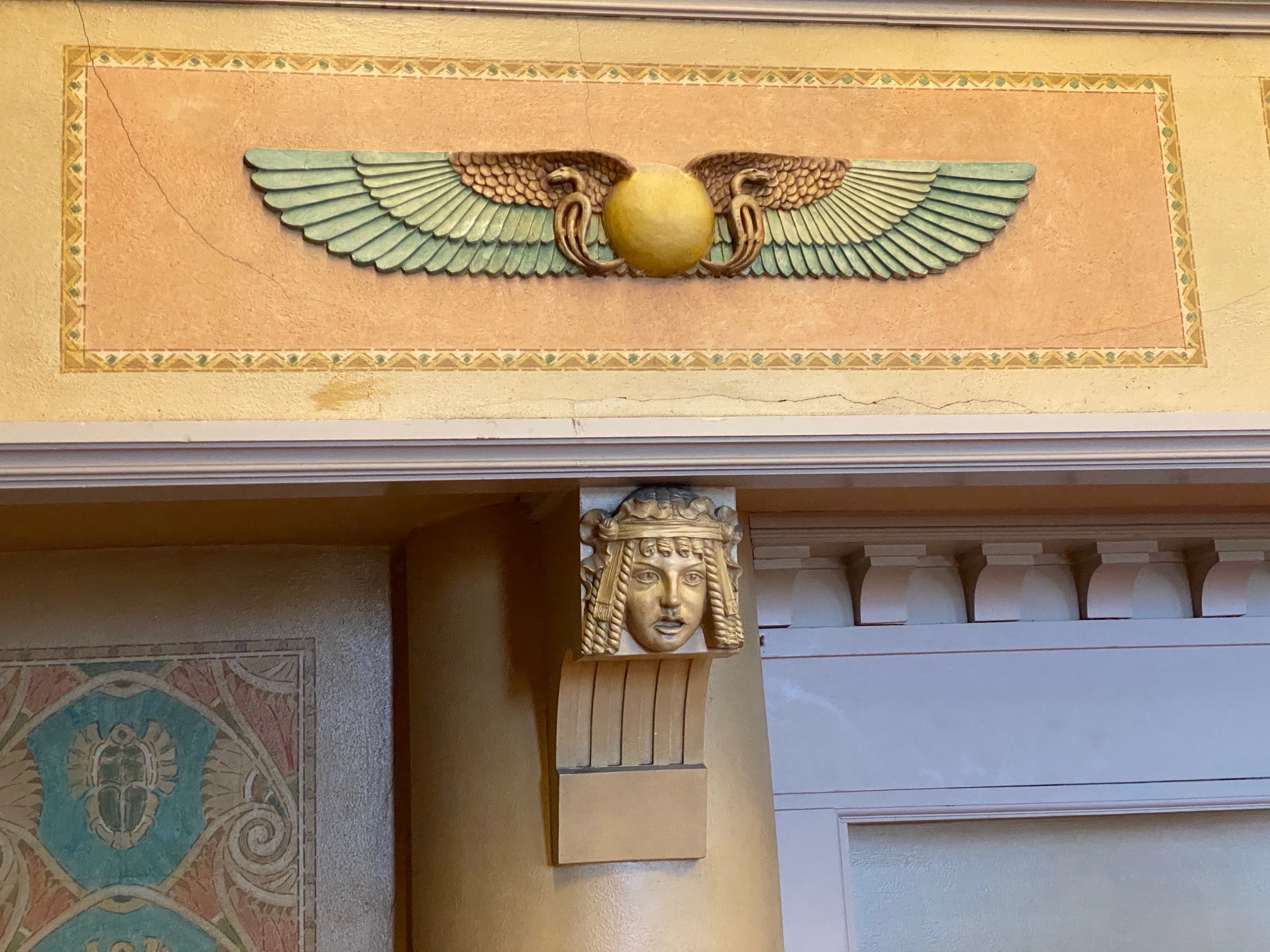
The wings generally represent time passing, spiritual freedom, protection, and the soul’s ascension to a higher state.
Elegant Venue Rooms
My husband and I were treated to a very informative tour of the Masonic Temple in July, 2021, that included the Ballroom, the Falls Penthouse, the Commandry Room, the Auditorium, and the Blue Room. Today, the building is used for such events as weddings, reunions, funerals, proms, and baby showers.
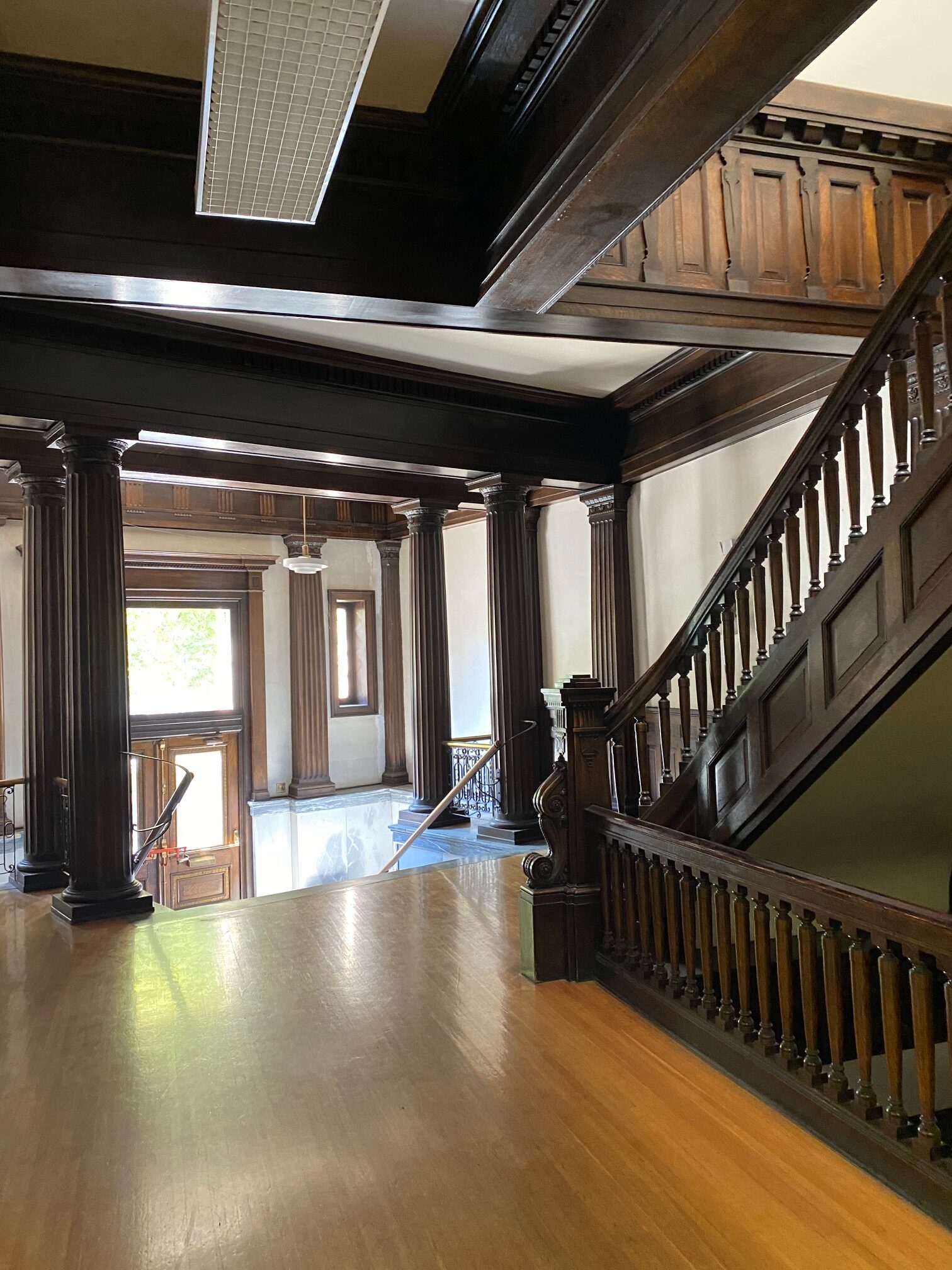
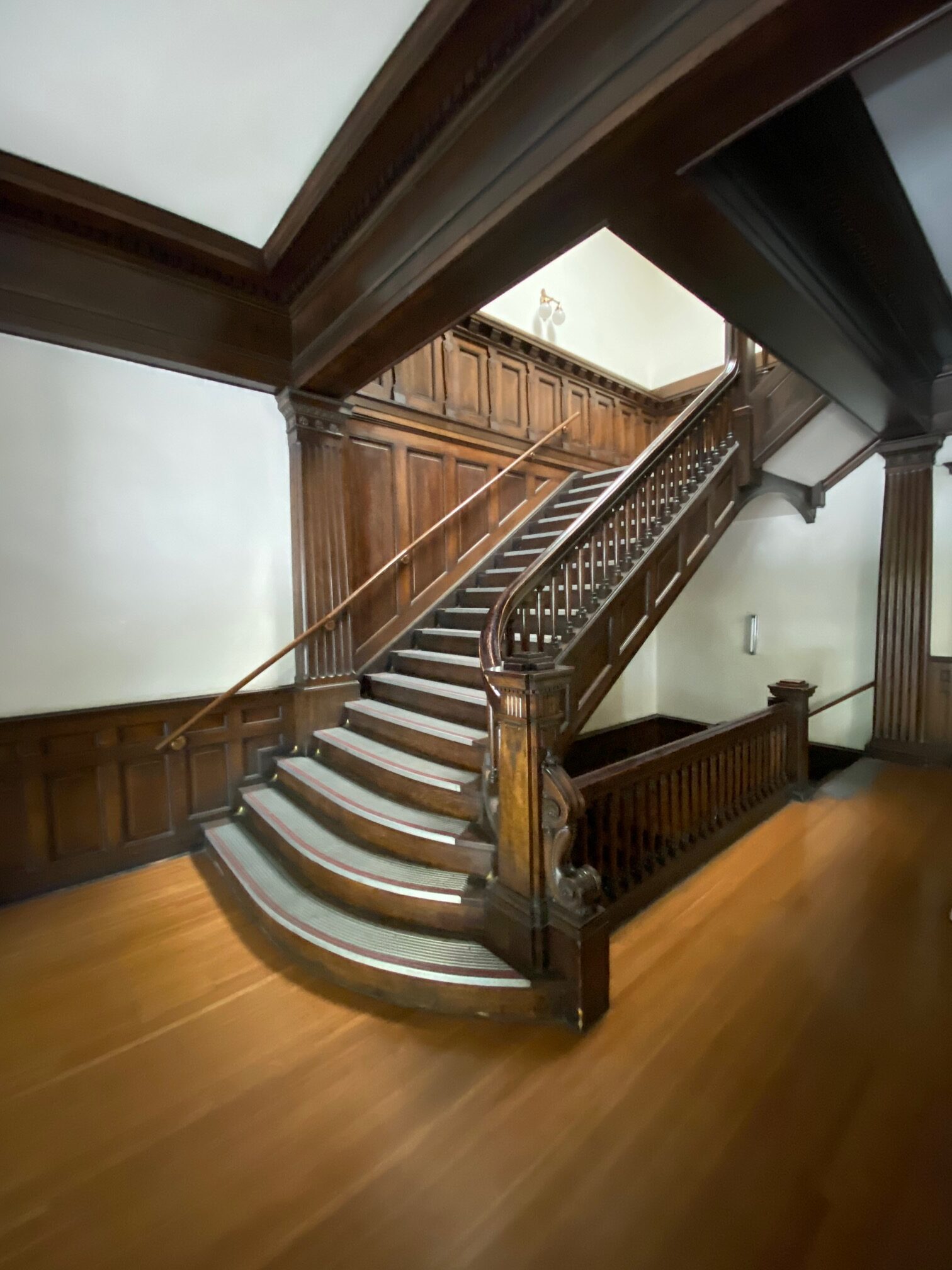
Masonic Temple Ballroom
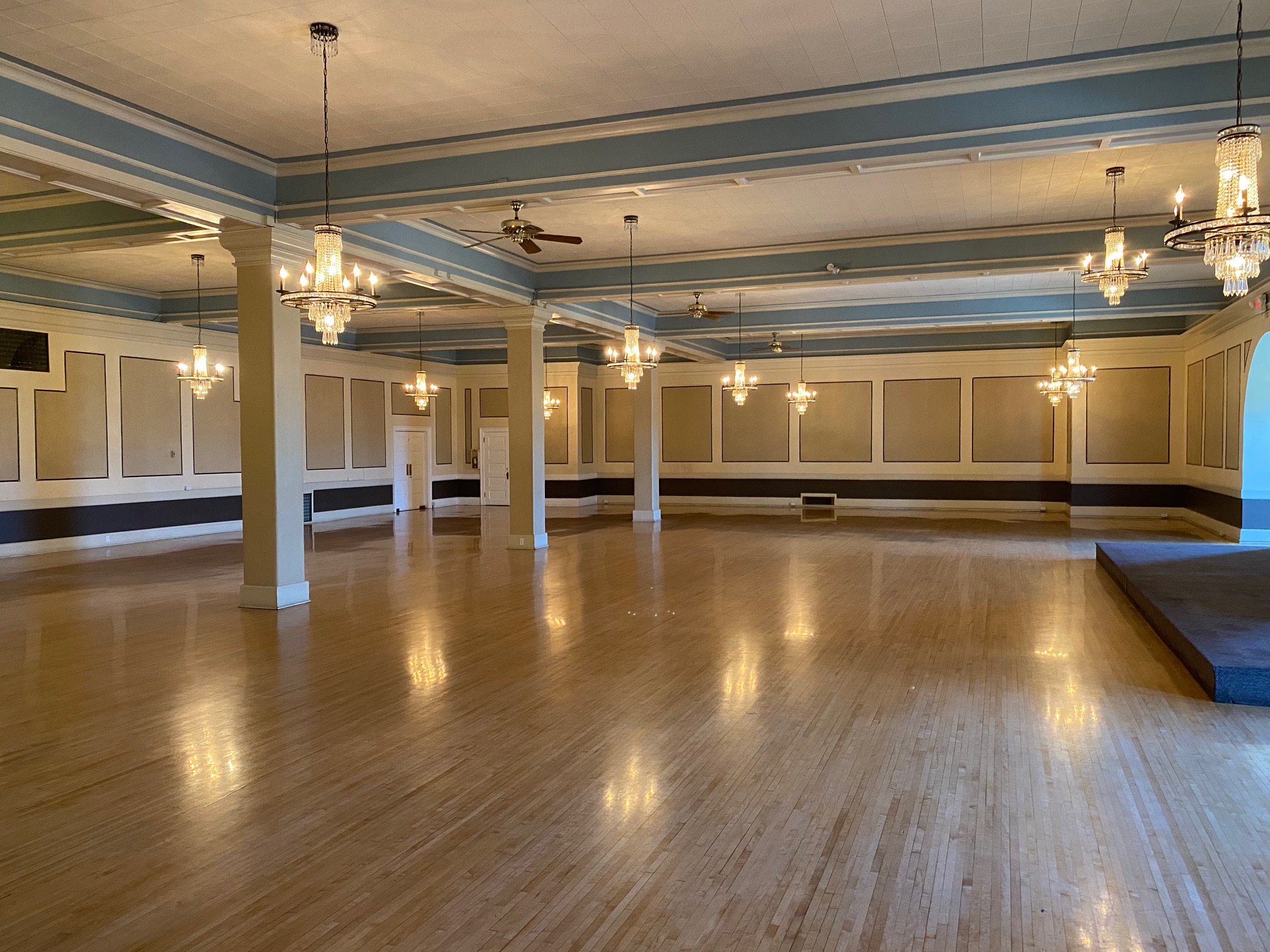
The large, elegant Ballroom features a “floating” hardwood dance floor with chandeliers purchased by members.
Masonic Temple Falls Penthouse
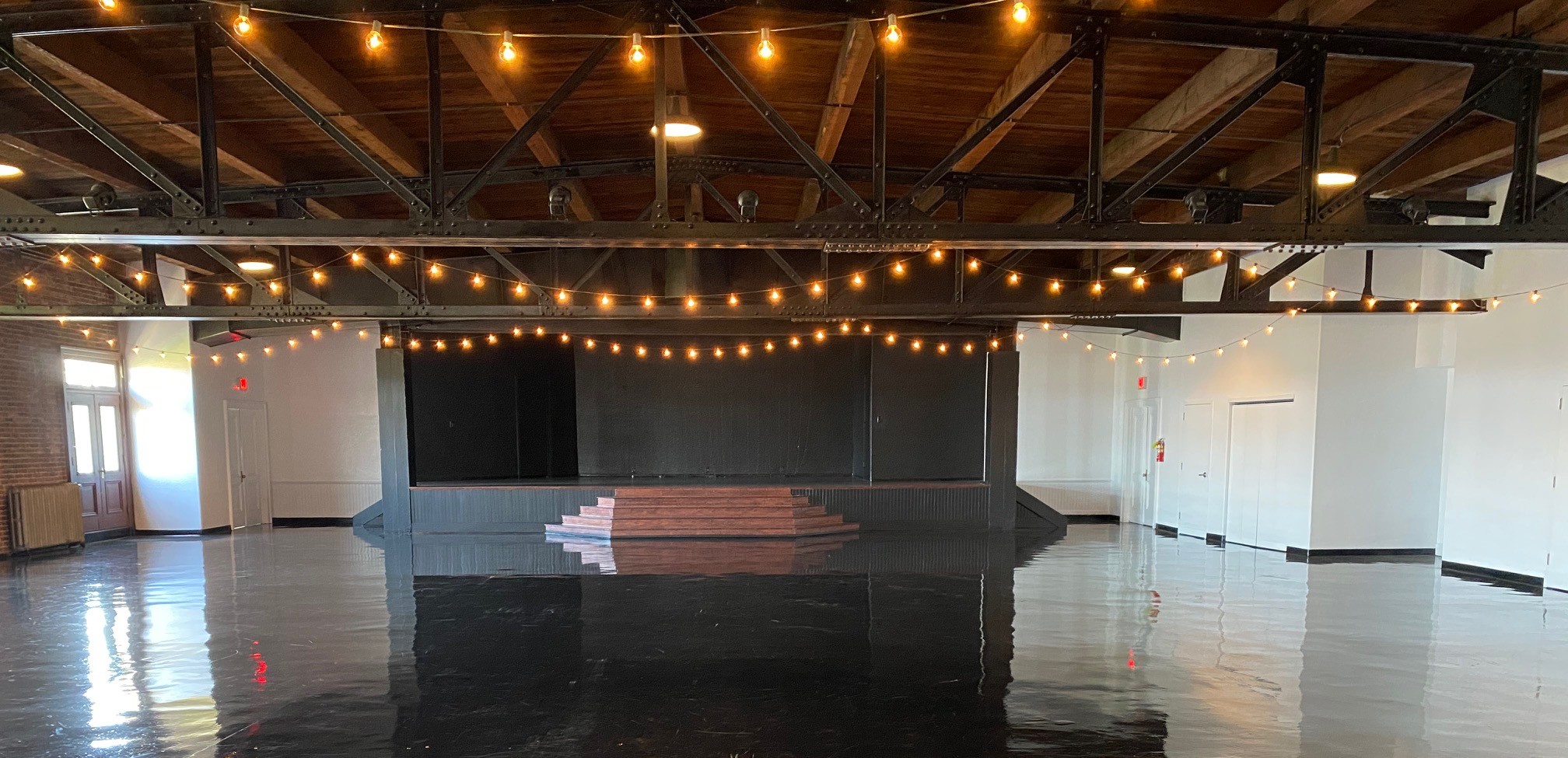
The Falls Penthouse has one of the best views of the Spokane River falls and the gorge in town. It has a jet-black waxed floor, a 100 year-old exposed timber truss-beam ceiling, and five double doors to a north-side balcony running the length of the building.
Masonic Temple Commandery Room
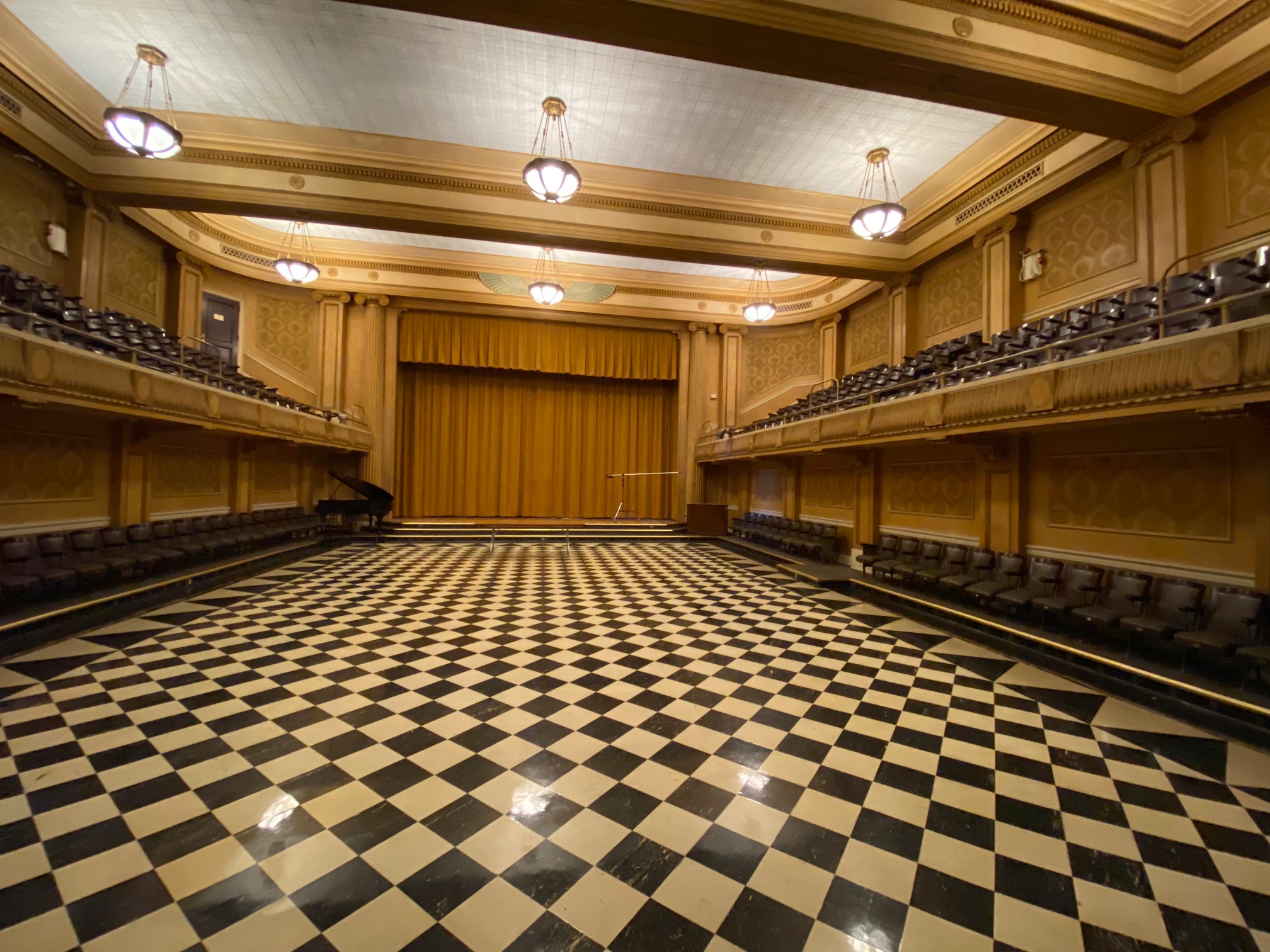
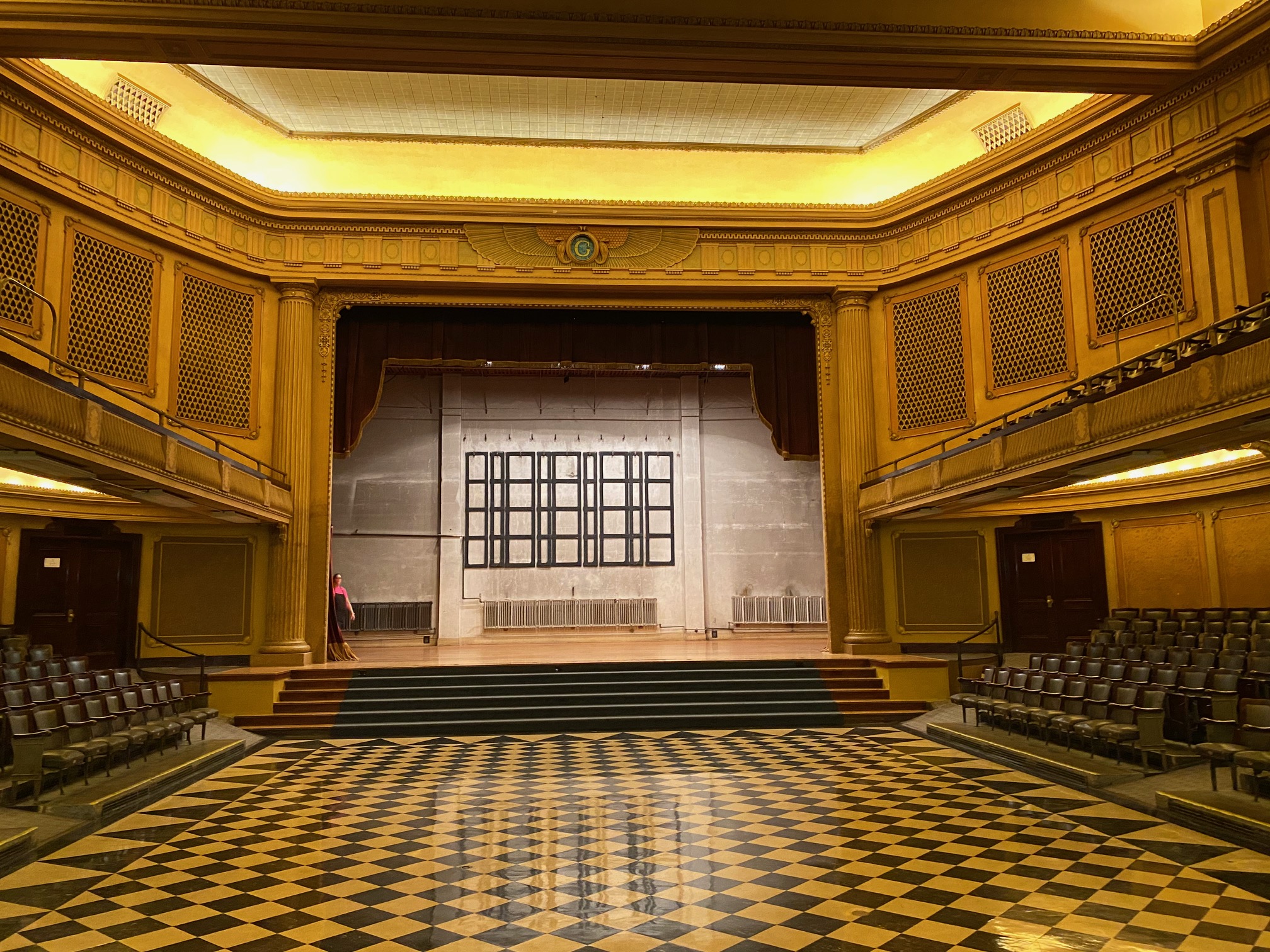
The Commandery Room has a stage at one end, a black-and-white checkered dance floor, stenciled wall treatments and horseshoe-shaped seating with a full balcony. It has been used for rituals and ceremonies which included elaborate costumes and robes such as were used by the Shriners expressing their Arabic history.
Masonic Temple Blue Room
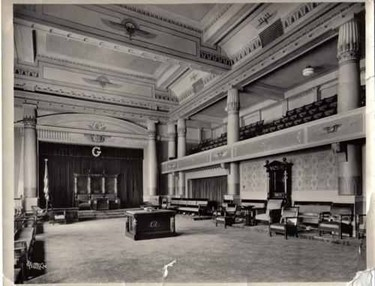
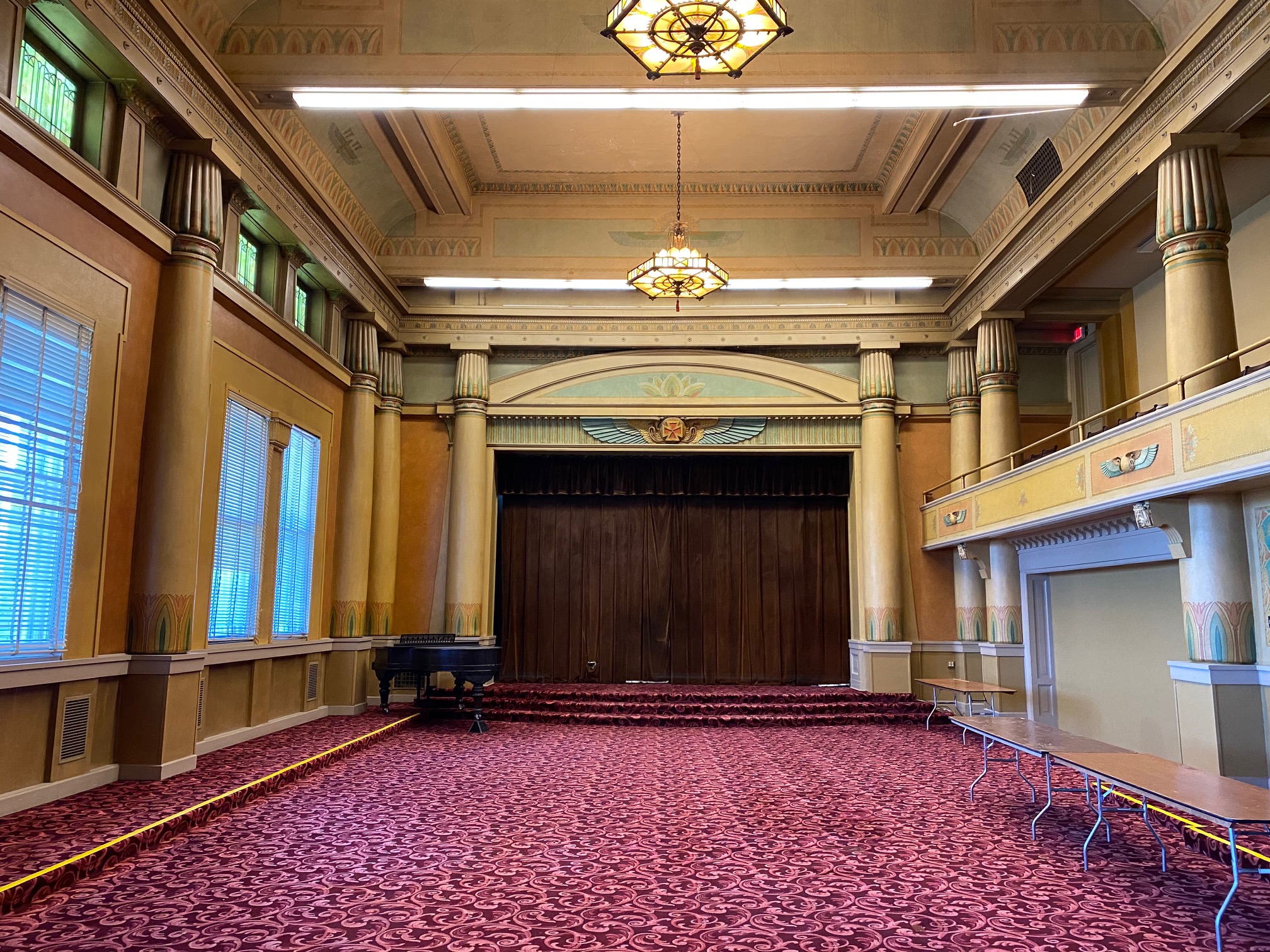
There are also smaller meeting rooms such as the Blue Room with its colorful and elaborate painted designs. Members of the Smithsonian Institution even visited and took painting samples in 2018.
Masonic Temple Auditorium
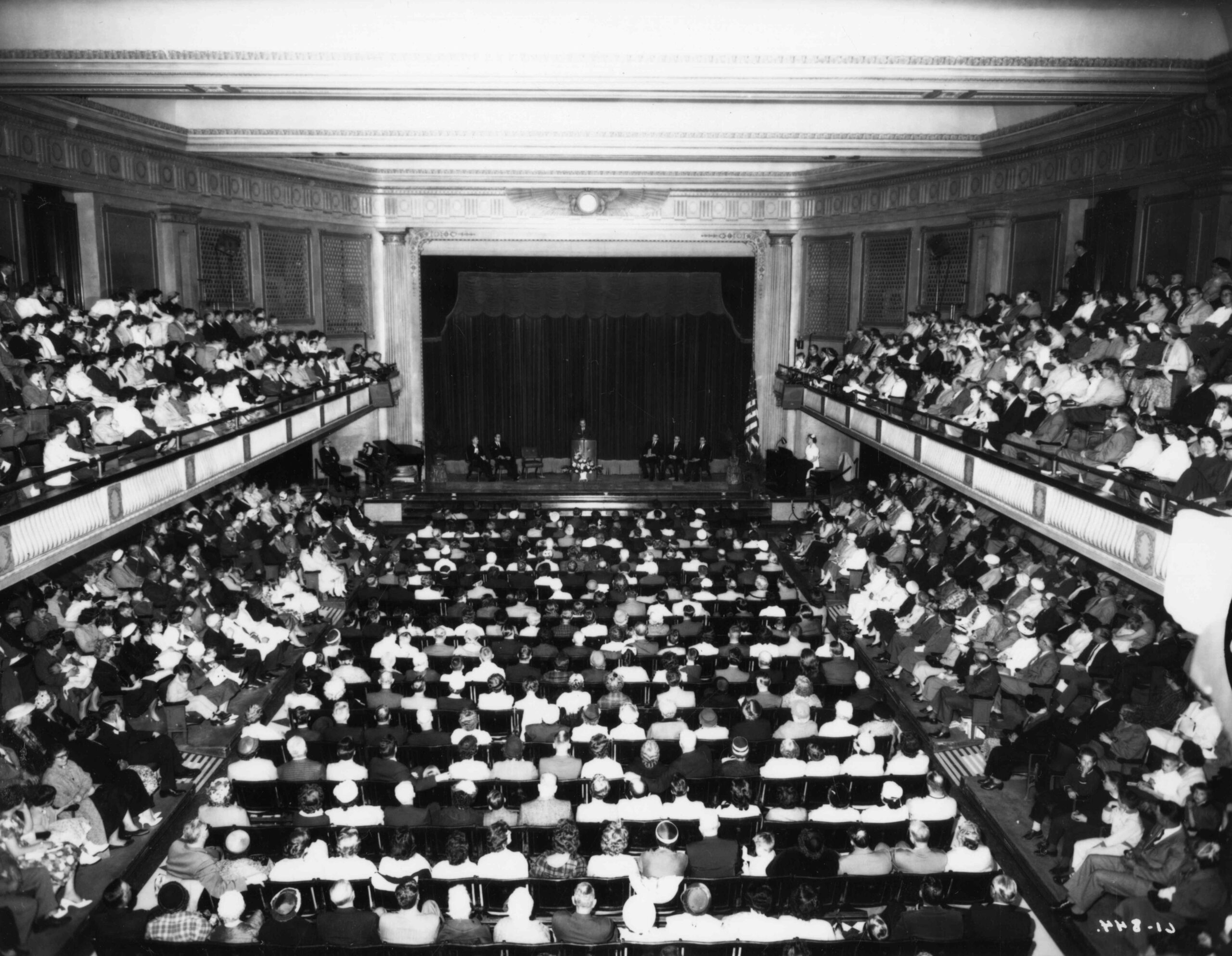
The Auditorium, one of the most familiar rooms, has a deeply coved ceiling reflecting the era’s taste in theater décor. It had the first projector in Spokane before movie theaters and has been used for film screenings over the years.
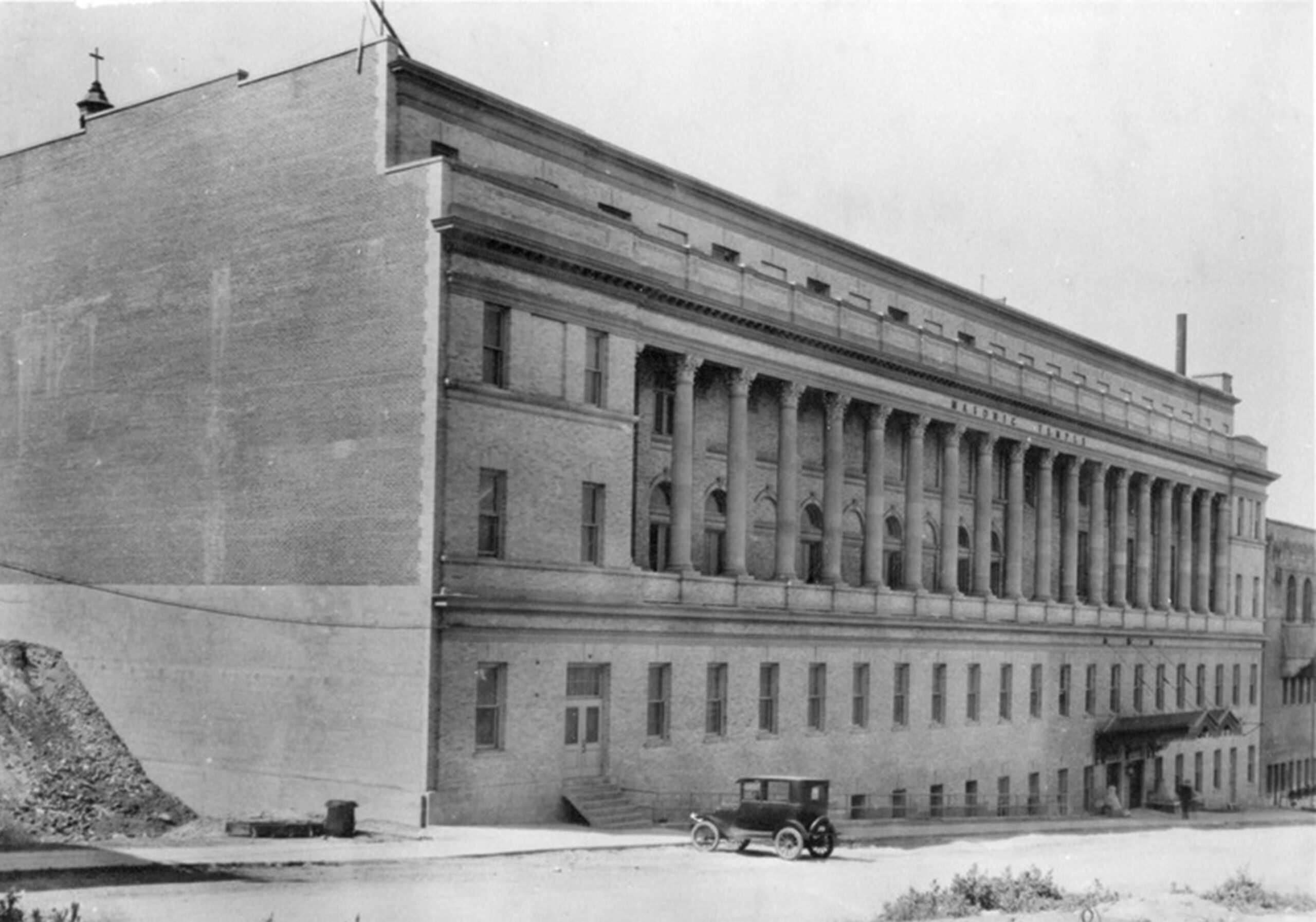
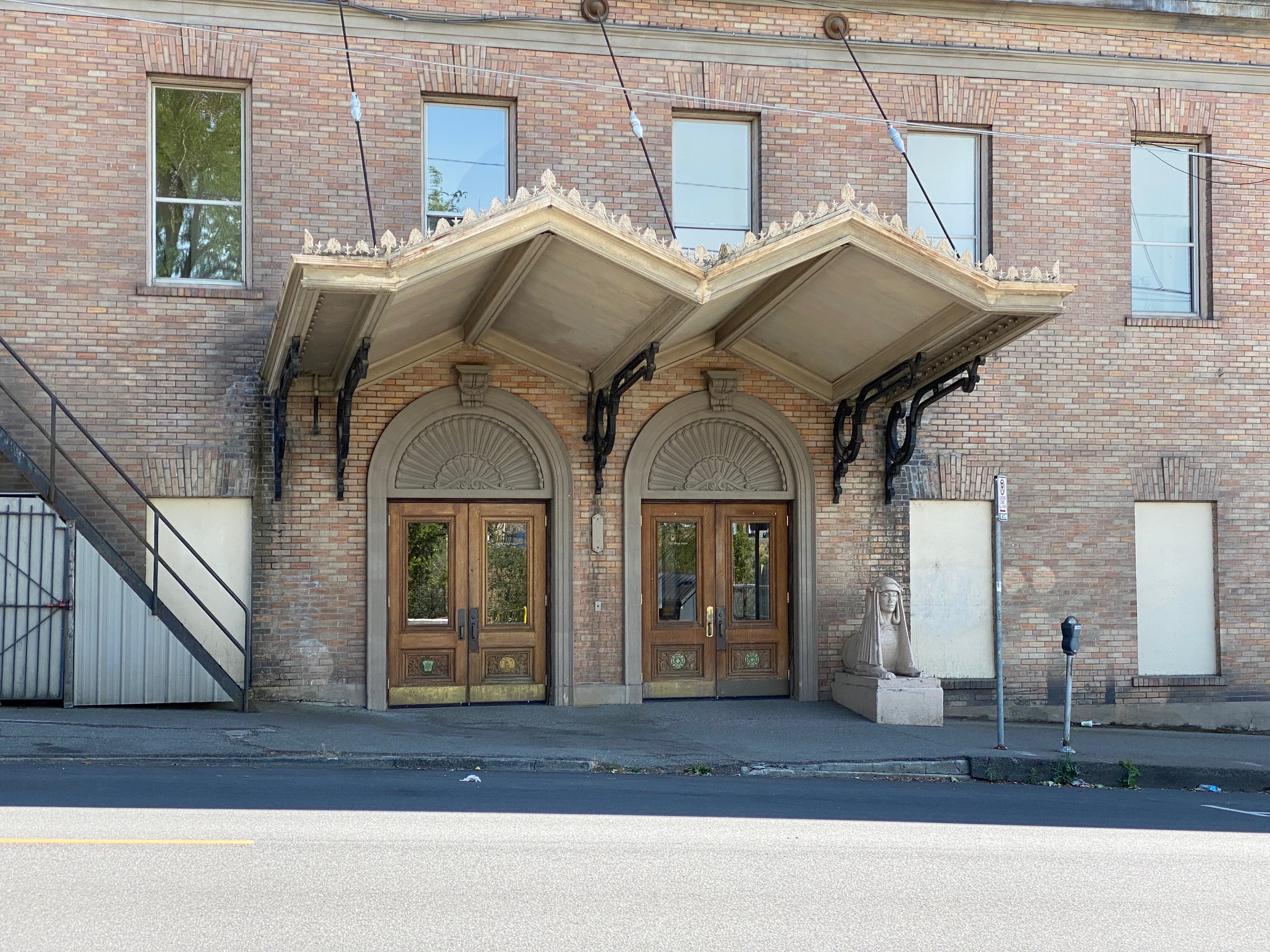
The Auditorium can be accessed on the 1107 W. Main Avenue side of the building. There is an elaborate marquee entrance that is flanked on the right by the statue of a sitting lion that has the head of an Egyptian woman.
Masonic Temple Operations
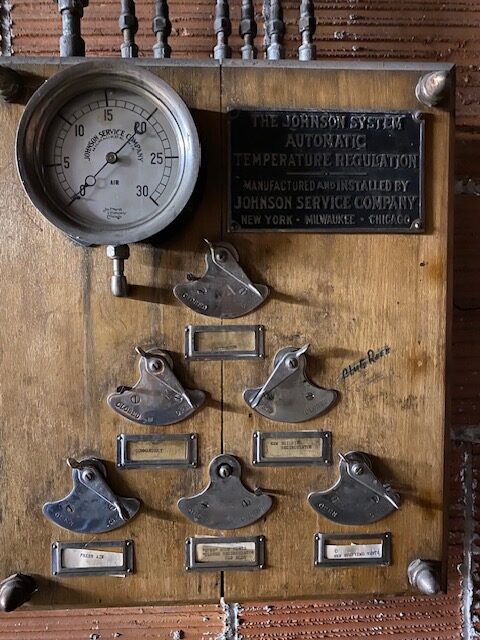
The original stage equipment, electrical panels, and wiring are still used to this day. Much of the heating system that is used today is original to the building. There are also utility rooms below ground. They include areas that are underneath the Spokane sidewalks that connect to a series of underground tunnels.
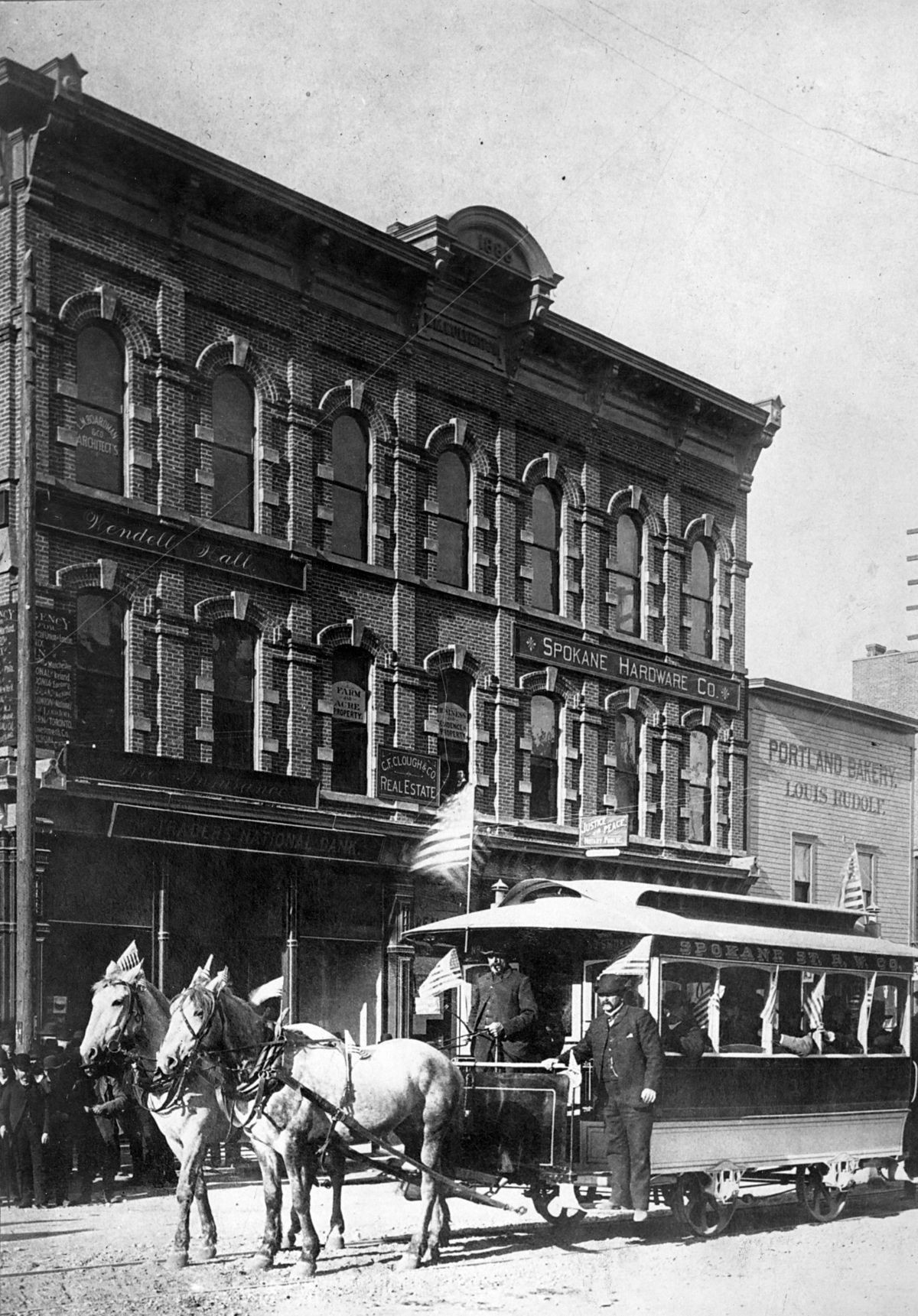
Masonic Temple Home Before The Great Fire of 1889
In 1880, Spokane—named “Spokan Falls” at the time—was a classic old west town experiencing a growth surge and had a population of approximately 300 people. There were 16 local master masons living in Spokan Falls then including Rev. S.G. Havermale and Louis P. Ziegler.
The Masons applied to the Grand Lodge of Washington for permission to open the first lodge in Spokan(e) County. On January 8, 1880, Oliver P. Lacey, Grand Master of the Washington territory, gave permission to establish Spokan (later changed to Spokane) Lodge No. 34. On June 3, 1880, the lodge was officially chartered with Louis Ziegler as its first Master.
The home of the Spokane Lodge No. 34 was the Wolverton Block that was located at 614-618 W. Riverside Avenue. The building was destroyed in the Great Fire of 1889 along with all the lodge records with the exception of the charter and the bylaws book.
Interview with Former Masonic Temple Chairman
I had also the pleasure of interviewing Curly Werner, former Chairman of the Masonic Temple Association.
Curley became a Mason in 1962. He explained it is a fraternal organization of men who believe in one God or Supreme Being, promoting positive moral/social virtues, and are community-service, and philanthropic minded.
Men hear of the Masons by word of mouth or friends. The first step is candidate evaluation by members at a dinner prior to a monthly meeting which includes opening and closing prayers. The first level of membership is Apprentice, progressing to Fellow Craft at the second stage, and finally Master Mason. Progression involves education, attending meetings, and community service.
Curly was elected to the board overseeing finances. The board managed the exterior restoration project in approximately the year 2000 from a $650,000 National Park Service grant.
Curly stated the community service activities the members participate in include hospital care, eyesight/glasses support, speech therapy, and a children’s heart fund.
Masonic Temple Building Sold in 2013
With the age of the building, the demand for upkeep of it, and the downturn in Masonic membership, the expansive downtown Masonic Temple was sold in November, 2013.
Changing lifestyles and a decline in the popularity of fraternal organizations led to the sale and conversion of many fraternal buildings.
Masons Move to Spokane Masonic Center
The Masons moved to 506 W. Second Avenue (formerly the Arden Hotel) in 2016 which is called the Spokane Masonic Center. It has a main auditorium for meetings for such organizations as the Spokane Lodge No. 34, Scottish Rite, and York Rite. The building also has a library, dining room, kitchen, and offices.
When they moved from the Masonic Temple building, the Masons took with them the furniture and the grandfather clock donated by Mrs. James Glover. The furniture includes solid mahogany original pieces purchased for the temple in 1905, matching leather-covered chairs and sofas with claw feet, and benches and side chairs. There are also ceremonial pieces consisting of an altar, triple throne chair, and two single throne chairs some embellished with carved designs.
The Legacy of the Masonic Temple and Spokane Masonic Center
Over the years both the Masonic Temple and the Spokane Masonic Center have evolved with the times while keeping their history alive and appealing to new generations.
The use of the Masonic Temple today enables the community to take a step back in time to appreciate its grandeur. It allows us to acknowledge the contributions of those in the past and continue to appreciate it as a Spokane icon.
The Spokane Lodge No. 34 at the Spokane Masonic Center carries on the working traditions of its fraternal organization for the betterment of Spokane.
Sources
- Interview and tour with London Harris at the Masonic Temple July 5, 2021;
- Interview with Curly Werner, Former Chairman of the Masonic Temple Association, July 9, 2021;
- “Spokane’s Million-Dollar Masonic Temple”, The Spokesman-Review, April 12, 1925, page 9;
- Spokane Lodge No. 34 Masons, website accessed March 31, 2026 (https://www.spokane34.org/history);
- Wilson Criscione, “Masonic Center being reborn”, The Spokesman-Review, July 3, 2014, page a5;
- HistoricSpokane.org, Masonic Temple, website accessed March 23, 2026 (https://properties.historicspokane.org/property/?PropertyID=1872);
- Mike Corrigan, “Temple of History, Inlander, January 3, 2005;
- Jonathan Glover, “Freemasons in Spokane Move Headquarters After Nearly a Century”, The Spokesman-Review, October 26, 2016;
- Spokane Register of Historic Places Nomination Form, OPR 91-774, accessed July 3, 2021 (https://www.historicspokane.org/wp-content/uploads/2019/03/Nomination-for-upload.pdf);
- Notice of Management Agreement, Office of Spokane County Auditor, 1992, Spokane City/County Historic Preservation Office, accessed July 3, 2021 (https://www.historicspokane.org/wp-content/uploads/2016/10/Masonic-Temple-Updated-Management-Agreement.pdf)
- “Spokane’s Masonic Center sells for $1.1 million”, The Spokesman-Review, November 6, 2013.
Image Sources
- Masonic Temple #07 (1920/1930), Spokane Public Library, accessed March 25, 2026: (https://lange.spokanelibrary.org/items/show/1078);
- Masonic Temple 1953, Northwest Museum of Arts & Culture/Eastern Washington State Historical Society, Charles Libby collection, L87-1.74279-53.
- Masonic Temple crowning of Indian Princess at the 1926 Indian Congress, University of Washington, accessed March 23, 2026: (https://digitalcollections.lib.washington.edu/digital/collection/loc/id/839/rec/6);
- Masonic Temple Spokane Lodge No. 34 Symbol, accessed March 30, 2026 (https://www.spokane34.org/history);
- Masonic Temple Symbol Topiary at Manito Park 1910 Postcard, Spokane Public Library, accessed March 30, 2026 (https://lange.spokanelibrary.org/items/show/4299);
- Masonic Temple Entrance at 1108 W. Riverside Ave. Featuring Wood Detailing, author’s image;
- Masonic Temple Elegant Wooden Staircase, author’s image;
- Masonic Temple Ballroom, author’s image;
- Masonic Temple Falls Penthouse, author’s image;
- Masonic Temple Commandry Room, author’s image;
- Early Masonic Temple Blue Room, Spokane Lodge No. 34, accessed March 28, 2026 (https://www.spokane34.org/history);
- Masonic Blue Room Present Day Image, author’s image;
- Masonic Blue Room Detailing, author’s image;
- Masonic Temple Auditorium, author’s image;
- Masonic Temple Auditorium Meeting, 1961, Northwest Museum of Arts & Culture/Eastern Washington State Historical Society, Charles Libby collection, L87-1.844-61;
- Masonic Temple #06, 1107 W. Main Avenue View with Marquee Entrance, Spokane Public Library, accessed March 25, 2026: (https://lange.spokanelibrary.org/items/show/1077)
- Marquee Entrance on 1107 W. Main Avenue Flanked by Egyptian Statue, author’s image;
- Original Heating System Automatic Temperature Regulation, author’s image;
- Wolverton Block Building, circa 1881, The Spokesman-Review Photo Archive.