History of the Exchange
The Spokane Stock Exchange was established in 1896 and convened its first trading session in a storeroom next to the Trader’s National Bank on January 18, 1897. It was a private club that solicited new members by written invitation. In addition, the Spokane Stockbrokers Association was organized at that time with 30 charter members.
There were also 400 men from Washington, Oregon, Idaho, Montana, and British Columbia who met in Spokane to form a professional society called the Northwest Mining Association and brokers were eligible to join.
Two cousins who had worked on the New York exchange, Abe Irwin and Barney Barinds, lent the new exchange the prestige of their experience and helped write its regulations.
The stocks listed that first day were those of prospects in southeastern British Columbia mining claims from such areas as the Rossland-Trail Creek district and the Kootenay Lake area. There were no Idaho mining stocks listed then.
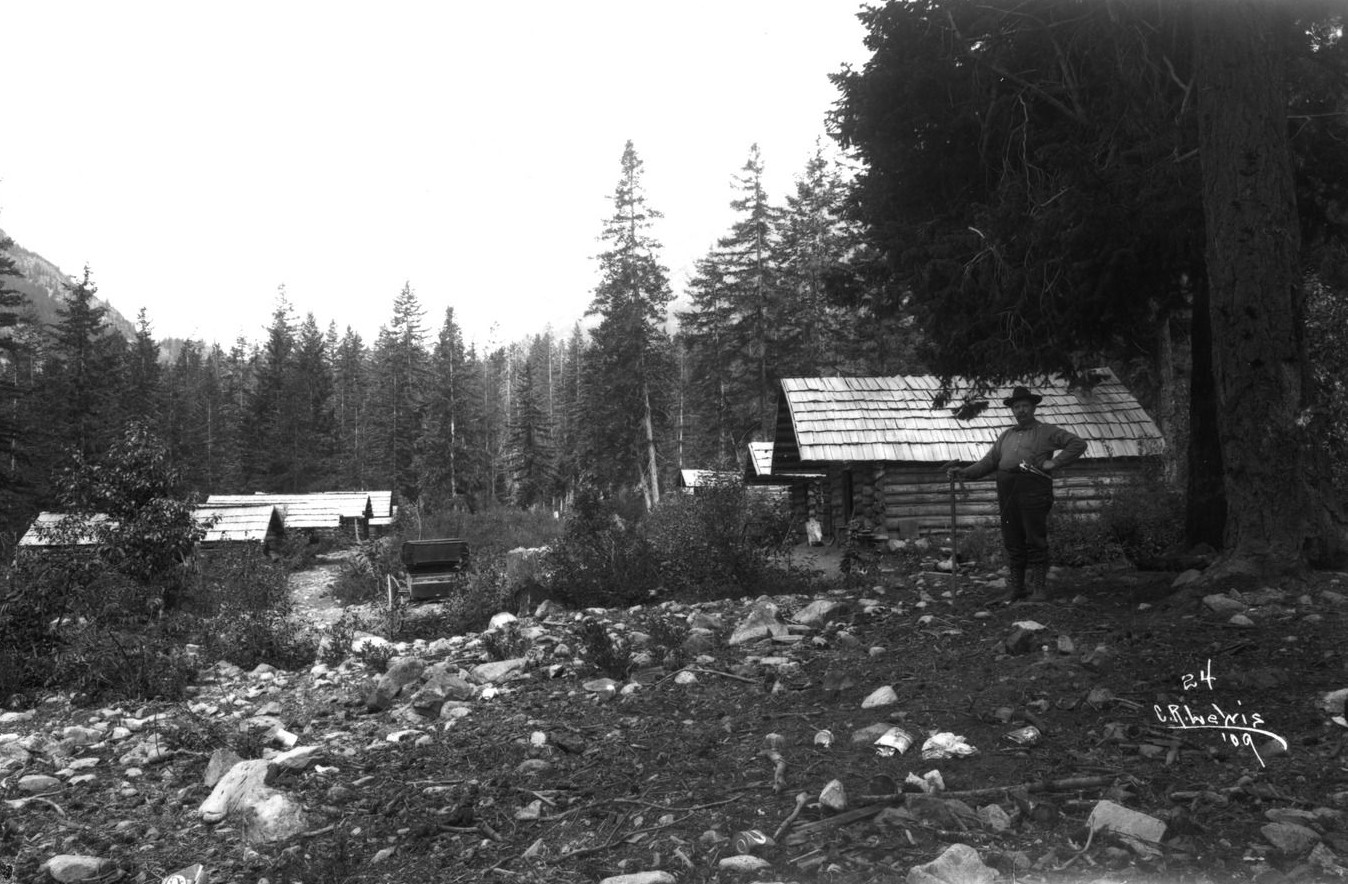
The Spokane exchange’s place in history results from its role as a capital market for northern Idaho and inland British Columbia. After the discovery of gold in California, mining camps developed in the mountainous states in the West. To develop their claims, prospectors or underwriters needed to find investors to sell shares in order to raise capital. The makeshift mining exchanges imposed some order on sales by publishing prices, circulating information about mines, and conducting stock auctions.
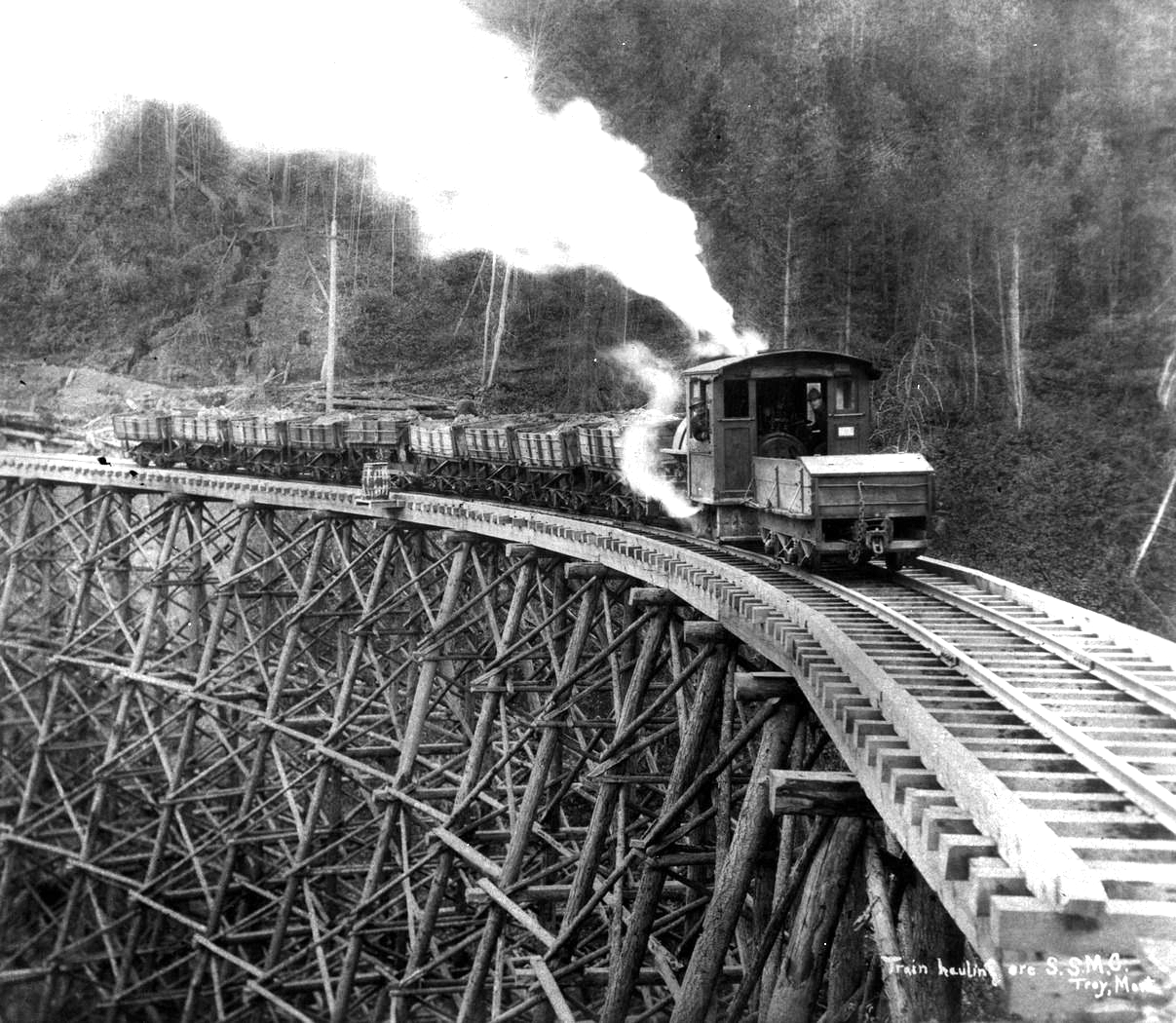
By the late 19th century, the railroad connected Spokane to some of the busiest mining districts such as the Coeur d’Alene of the Idaho Panhandle and those of inland British Columbia.
The linkage was clear: the Spokane exchange financed the mines, the mines required railroads, and the railroads served settlers, merchants, farmers, lumbermen, and manufacturers.
Spokane was the railroad and commercial center of the Inland Empire. It was the logical location for the exchange for stock trading that included gold, silver, lead, and zinc mines in the region.
Early Beginnings in an Unregulated Era
From 1897 to 1991, the Spokane Stock Exchange represented the Inland Northwest mining companies within regional and national markets and systems. It traded the stock of the British Columbia and Idaho mines.
Sales of mining stocks periodically declined. Brokers turned to new customers, farmers, who had recently sold their crops. Brokers persuaded farmers into diverting their profits that normally paid off crop loans and mortgages into stocks.
In 1912, a coalition of farm and labor organizations demanded the state legislature regulate brokers. Washington did not act but Idaho, Montana, and Oregon adopted securities regulation in 1913. The coalition tried again in 1914 to regulate brokers in Washington but failed. Then war intervened and the public turned to Liberty bonds which were sold through a massive advertising campaign.
Industrial Demand Grows for Metals
War stimulated the metals industry. Afterwards, there was a well-developed infrastructure for retail security sales with a favorable attitude toward stocks.
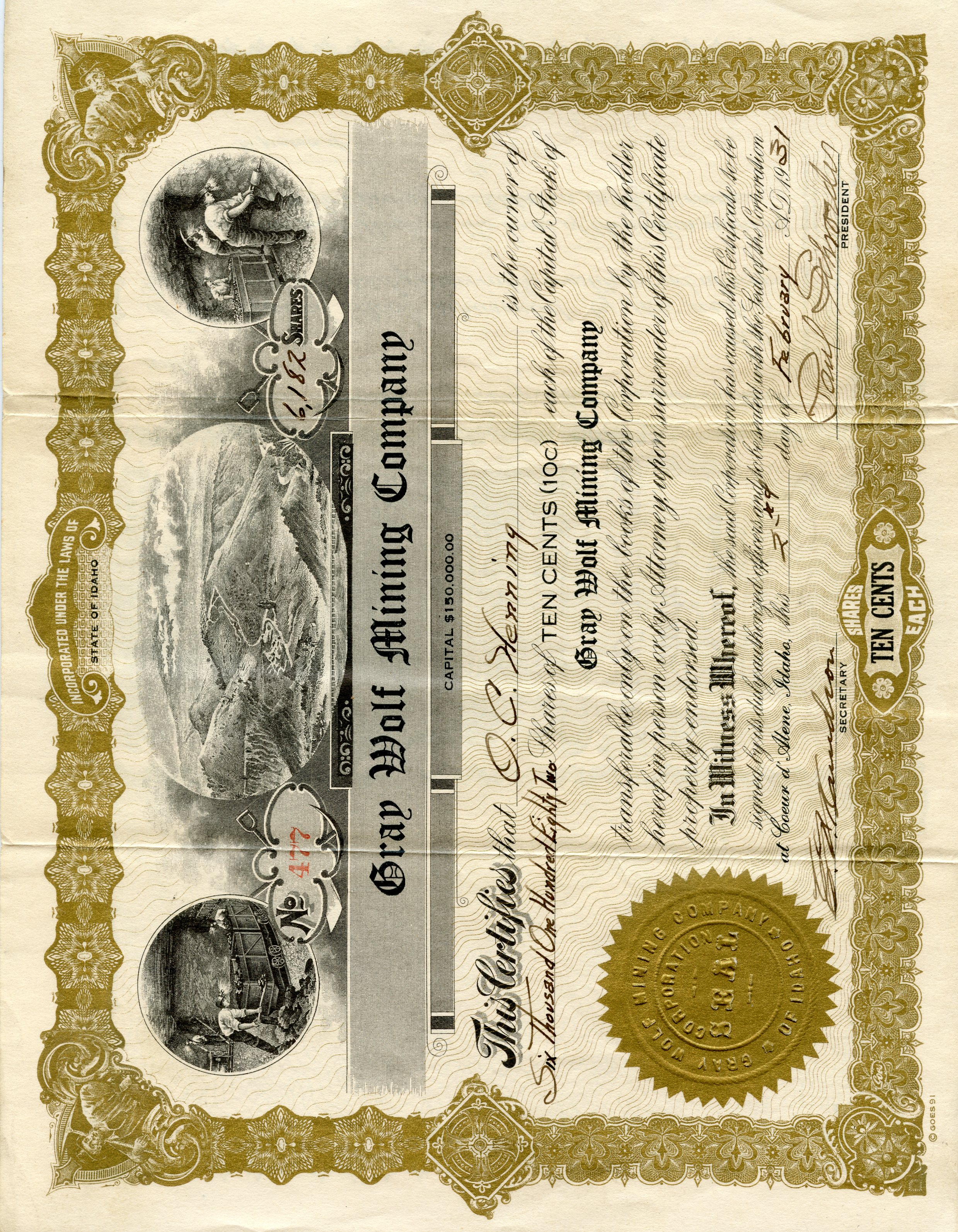
The federal government offered bonuses for production that resulted in nearly 550 new mining claims filed in northern Idaho by new companies seeking funds for development. They issued stocks low in value and high in risk. The stocks were traded over-the-counter (OTC) in regional exchanges such as the Spokane Stock Exchange.
Also, past history had shown that investment always turned to metals, especially silver and lead, following a war. World War II left the nation boasting the greatest backlog of savings in its history. There was great wealth that found its way into various channels of investment and metals was one of the markets that was attracting buyers.
Silver became popular due to the stress brought on by the wars in which people lost faith in paper currencies. An example was Germany’s inflation during the reconstruction period following the Versailles treaty. Such memories made people hoard hard money and reject paper currency whenever possible. Another factor in favor of silver was there were more silver certificates, silver dollars, and other silver coins in circulation in the United States after World War II.
The use of silver also became popular for war-time use in which it was a preferable bearing material for use in high-speed airplane motors. The world was moving into an age of higher and higher speed motors increasing the demand for silver and incenting investment in it. Its use also expanded into the manufacture of film for use in industrial films and also to meet the demands of the motion picture industry.
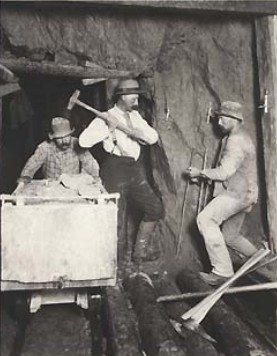
The United States overall produced barely enough silver, lead, and zinc for industrial use. The Coeur d’Alene mines then came in and brought added activity to the Standard Stock Exchange. The mining district—75 miles east of Spokane—runs 23 miles in length and is nine miles wide.
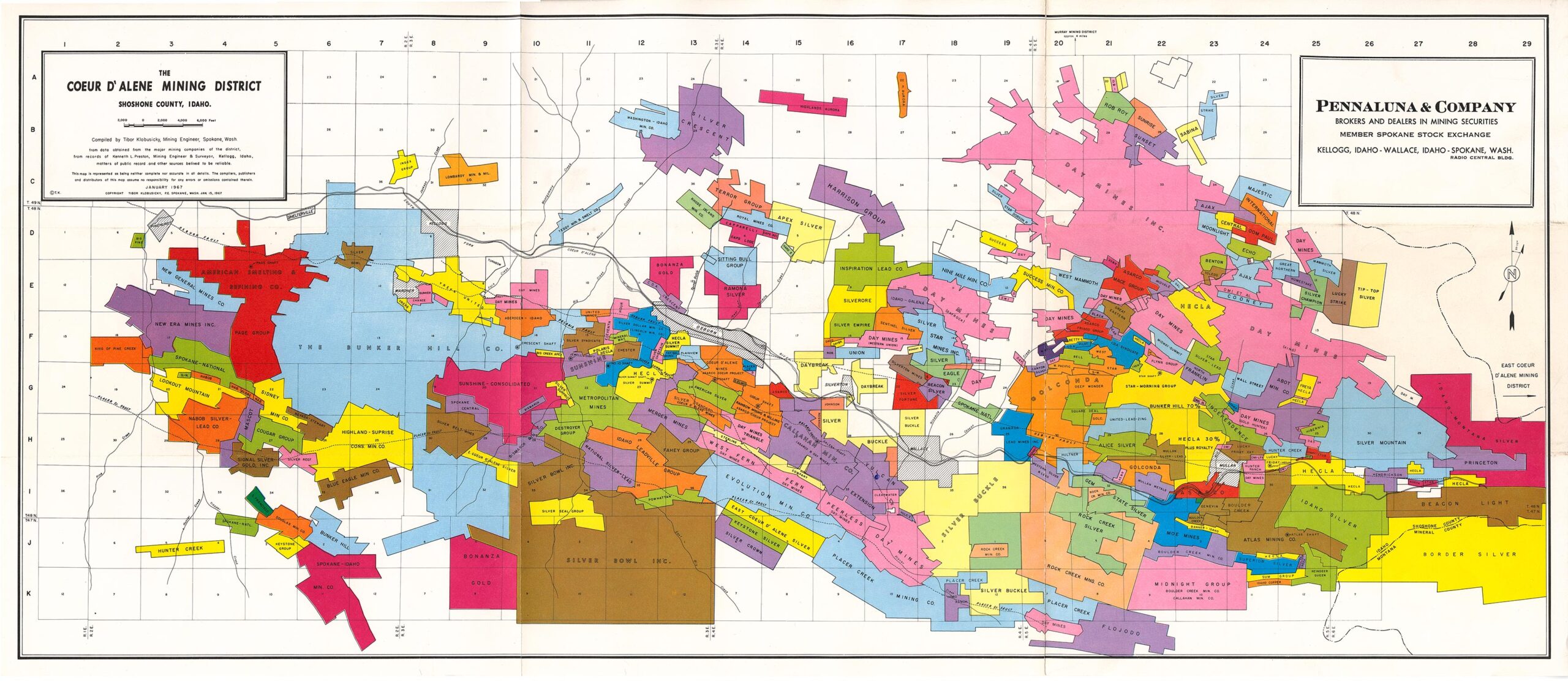
Idaho was producing one-fourth of all the lead mined in the United States and had the largest lead mine in the nation—the Bunker Hill & Sullivan. One-fifth of all the lead in the United States was going into the manufacture of high octane gas. Lead was also used in batteries, paint, and glass in large quantities.
The Coeur d’Alene mining district has been one of the richest in the country. Half of the nations’ silver has been produced in the Idaho mines. Since 1884, the district produced more than $3.5 billion worth of silver, lead, zinc, copper, and gold.
Types of Stocks Sold at the Stock Exchanges in Spokane
There were stocks that sold over-the-counter at the stock exchanges in Spokane. Over-the-counter refers to the process of buying and selling stock directly between two parties such as through a broker-dealer in regional and national stock exchanges.
Penny stocks were sold over-the-counter (often sold under a $1) involving companies that did not meet strict listing requirements and were referred to as “unlisted securities”. The stocks were low in value and high in risk.
Listed stocks could also be penny stocks sold under a $1 or for amounts over a $1. Companies had to meet certain requirements in order to have their stock designated as listed. The requirements included minimum financial, liquidity, and governance standards. The stock had to be approved for trading on the stock exchange. Companies that sold their goods and services in defined markets, had financial reserves, and issued dividends were the types who would qualify.
Listed stocks were sold in regional exchanges such as the Spokane Stock Exchange and also through a process known as “dual listing” on national exchanges.
Regulation Evolved Over Time
Stock trading initially began in a totally unregulated era. Practices such as insider trading and brokerages publishing fraudulent over-the-counter quotations became illegal with the passing of legislation and federal oversight.
In 1923, the Washington legislature enacted securities regulation which required brokers to obtain licenses.
In October 1929, the stock market crashed. Investigations revealed that popular stocks had been subject to flagrant abuses during the twenties. The investing public demanded regulation of the markets. In response, Congress passed the 1933 Securities Act which required firms issuing securities to disclose detailed financial information to the Federal Trade Commission.
In 1934 Congress extended federal surveillance with the Securities Exchange Act creating a new, independent agency, the Securities and Exchange Commission (SEC), to police issuers, brokers, and exchanges. The SEC announced it would begin supervision of the exchanges on October 1, 1934.
With the passage of the Silver Purchase Act of 1934, the government was authorized to purchase newly mined silver at a fixed price. With federal oversight, the market for mining stocks began to improve.
The Washington State Legislature passed in 1937 its own act for regulating mining security sales. The Northwest Mining Association lobbied for the legislation to distance itself from the stock market. Brokers were no longer qualified for membership in the association. The president of the mining association predicted the new state law would aid in restraining the less ethical members of the industry.
Both the SEC and the state extended their monitoring of the market and interest in stocks slowed but the war stimulated the metals industry.
The pace of trading prompted the SEC to increase tracking transactions in the 1960s. There were more than 100,000 investors from all 50 states and many foreign countries working with the Spokane Stock Exchange then. During that time, the SEC concluded roughly half of the over-the-counter sales closed below prices reported to banks and newspapers. They alleged that 11 of 13 member brokerages published fraudulent over-the-counter quotations and sought injunctions in federal district court to halt this practice. With increased regulation, the distribution of quotations to banks and the press eventually resumed.
Roles of the Spokane Stock Exchange
The roles of an exchange are to assure orderly trading under rules that protect buyers and sellers and to circulate information about the companies that issue the stocks. The exchange provides orderly quotations of mining stocks and keeps people advised of developments.
The underwriter acts as the seller for the company that wants to offer shares to the public to gain funds for expansion. Before the exchanges, mining stocks were often sold through banks. The mining exchanges imposed some order on sales by publishing prices, circulating information about mines, and conducting stock auctions.
Members of the exchange saw themselves as contributors to economic growth: they kept mining in the public eye, published stock prices, circulated news about mines, and attracted buyers who might not otherwise have considered mining stocks.
Spokane merchants liked the stock exchange because it brought people and their money into the city.
Penny Stocks – Buyer Beware
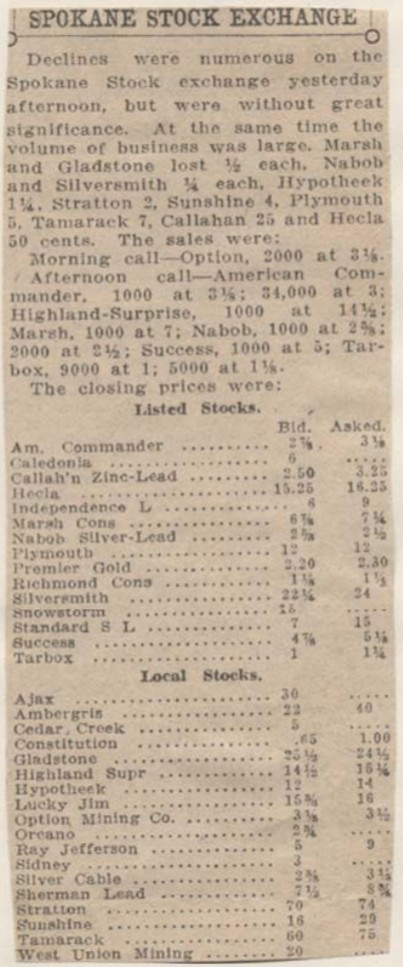
Early on, the exchange operated in an open-auction environment. Startup mining ventures could sell their newly printed penny stock certificates to eager investors. The stocks sold for whatever a buyer would pay. The investors were motivated by the examples of the legends of sudden wealth. They hoped to strike it rich like Patsy Clark, August Paulsen, or Levi Hutton.
Some of the little companies such as small mining firms could not afford to list on an exchange so their stock was quoted over-the-counter. As an example, in the past the listed stocks—the ones that appeared on the exchange board—represented only 30 percent of the trading. The other 70 percent of the trading was in “penny” shares which were sold below a dollar over-the-counter and not listed. They were traded aggressively mostly by telephone.
People bet on penny stocks. For example, some listings on the exchange board might start out as a 10-cent stock. As with all stocks, there was risk with penny stocks. They didn’t necessarily trade based on the market value of the assets or the company’s earnings.
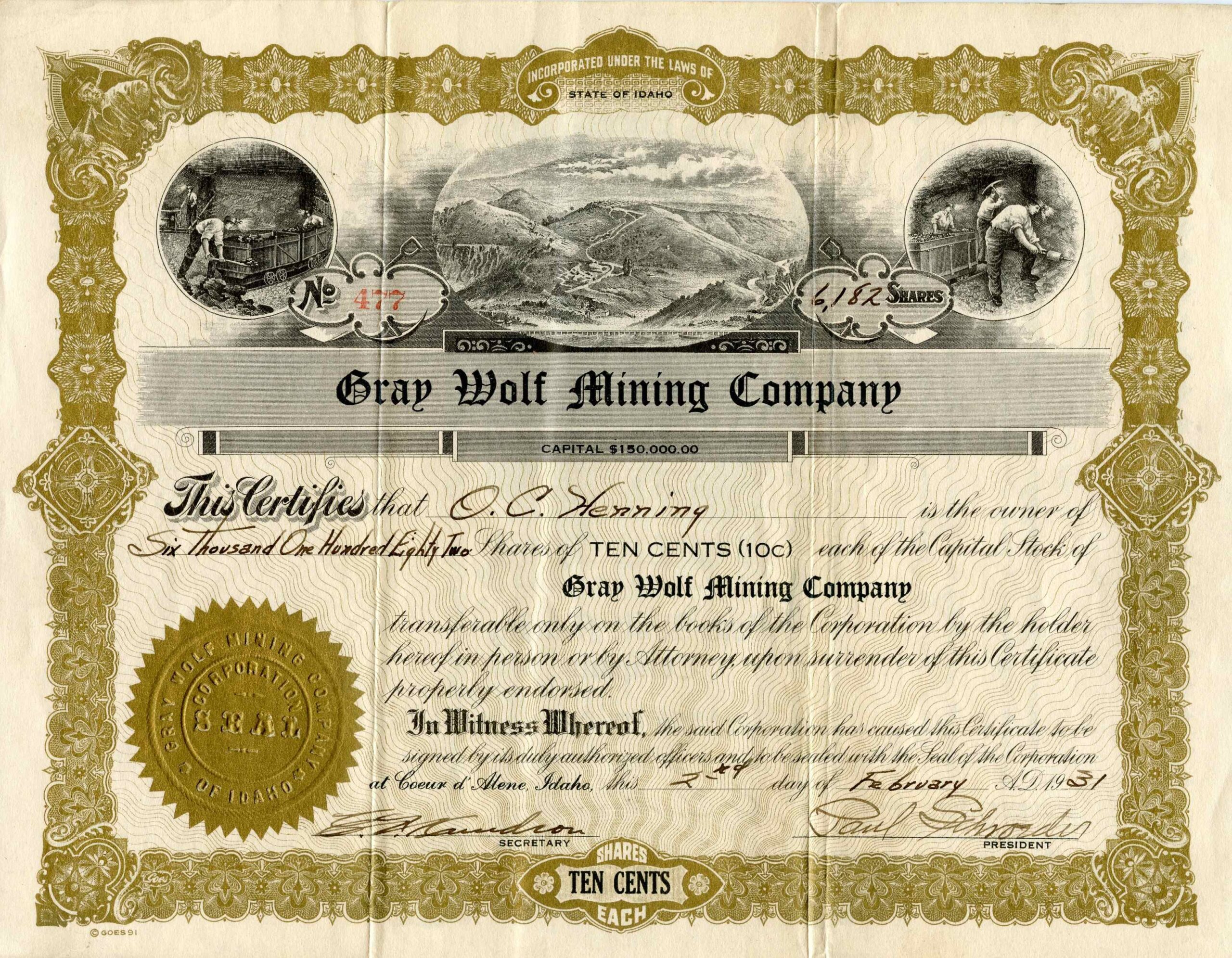
Many penny stocks were traded upon hunches such as the prospect was near a proven ore body; speculations; recommendations by promoters; enthusiasm, persuasion by stockbrokers, or the market’s psychology at the time.
Shares were traded using a broker-dealer network linked by telephones into a quotation system. There were some Spokane brokers who would go into a room off the trading floor to deal by themselves in over-the-counter shares.
Buying Advice for Penny Stocks
Investors were advised to carefully review each prospectus, or offering circular, and identify the underwriter. The underwriter was as important to the success of a new issue as the issue itself.
An example of how an investor bought penny stocks is as follows: (1) the investor kept in daily or weekly contact with the broker; (2) tried to buy the initial offerings at under a dollar; or (3) waited until the stock came out and began to “trade on the board”. If the stock went up, the investor sold half of the shares at a profit to pay back the initial investment and kept the remainder of the profit to buy other stocks; and (4) practiced careful buying and selling and keeping an eye on the trends with the advice of the stockbroker.
By taking these steps, the investor’s portfolio of penny stocks grew with a minimal amount invested. Also, awareness of market ups and downs was advised as being key to investing.
Selling Tactics Used for Buying Penny Stocks Over-the-Counter
In the early days of the exchange with transactions involving mining stocks, the term “Moose Pasture” was used to refer to “mines that thrived on rumors”.
Inside information—buying stocks of companies with good locations and good management—has been used by investors who have profited by buying penny stocks.
Inside information was passed to investors in such ways as by telephone or even “offhand comments”. An example of an “offhand comment might be: “I see that Charlie did it”, or “Harry says Con hit it big”. Knowing Charlie or Harry and what was done tips the insider to the potential rise in penny stocks and who buys them. For example, there were mining claims by new companies that were non-producing. They sought funds through sales of penny stock for development. Thus, there was a lot more inside information being passed around.
The professionals knew that producing companies were more solid indicators of movement in the market and they influenced the entire market. As an example, Silver moved first, then the New York Exchange, then the Day Mines or Silver Dollar, and finally penny stocks.
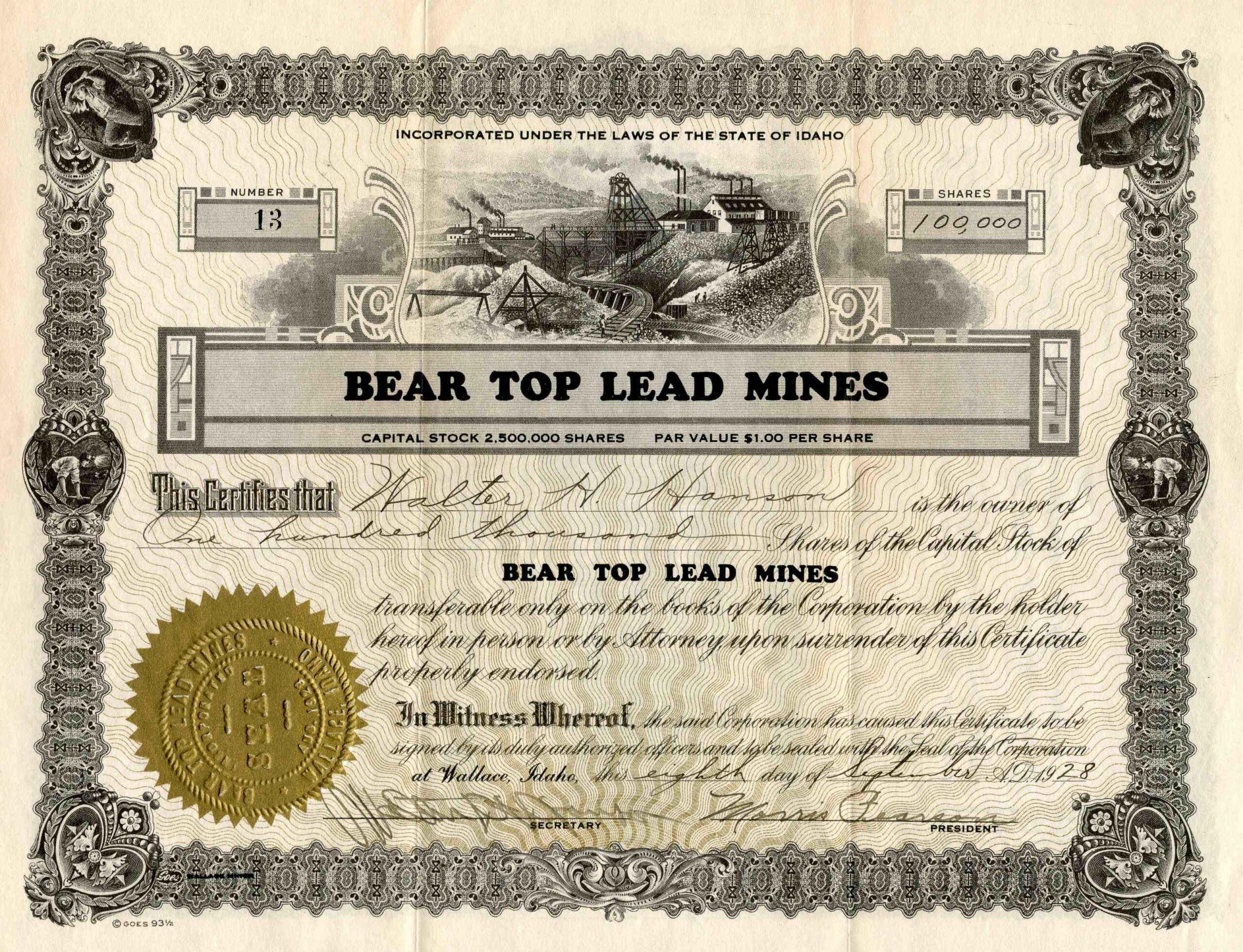
A draw to the stock market for some investors was they could buy into mining companies for a few hundred dollars. They thought they could get more leverage with 10,000 shares of penny stocks than with twenty of a high-priced, dividend-paying stock. For comparatively modest sums of money , investors became focused on quotations, trades, mergers, discoveries, and rumors.
Some investors ended up losing their investments in what was later found out to be worthless companies and “salted mines”. “Salting mines” was a practice where rich mining ore would be brought from a successful mine and placed in a worthless mine. The practice was designed to prove to another wealthy investor the mine was worth buying.
Some mining company stock issues were traded over-the-counter for as long as 40 years and never produced enough metal that could be profitably extracted.
Alternatively, the market did produce some millionaires. As an example, the Lucky Friday mine was presumed dormant as ore had not been extracted from it since the 1890s. However, there was a major hit in 1940 that resulted in more than $100 million in silver harvested from that discovery.
Mining stock prices have been cyclical just like the overall metals market. The Spokane exchange survived for a time largely on the durability of the Coeur d’Alene district lead, zinc, and silver mines while the other exchanges closed.
Comparison of Listed Stocks to Penny Stocks Sold Over-the-Counter
Of the types of stocks investors could feel confident in, they were the listed ones rather than the penny stocks. The listed stocks were approved for trading on the stock exchange. They were the shares of producing companies with reserves, dividends, and markets. However, there were risks for those investing in the stock market regardless of the type of stock.
The penny stocks that were sold over-the-counter were mostly those of non-producing companies that did not pay dividends. The companies were trying to raise capital through stock sales to explore or develop mine claims.
Without the Spokane exchange, there wouldn’t have been any mining for areas like Kellogg and Wallace. There wouldn’t have been a chance to develop those properties without the speculative funds raised through selling stocks.
The Standard Stock Exchange
In the 1920s, salesman Sam J. Wilson borrowed $10,000 from his wife to open a brokerage office in Spokane. Each month Wilson’s Northwest Mines Investment Company brought out a new issue at about 25 cents a share. Sam advertised it as “the most important strike in the history of this mine is ‘momentarily expected’”. Buyers would line up with grocery store and rent money to get in on the action. They even put what little they had in envelopes and tossed it over the transom window above his office door in order to get it to him.
The Spokane Stock Exchange refused to sell Sam Wilson one of its seats on the grounds that one of its stocks was demonstrably worthless. So Sam Wilson formed his own exchange called the Standard Stock Exchange. He took a number of members of the Spokane Stock Exchange with him to his new exchange. On January 3, 1927, the Standard Stock Exchange incorporated. It prospered and nearly drove the older, Spokane Stock Exchange, out of business.
The Standard Stock Exchange was among the first brokerages to apply for registration as a national stock exchange under the Securities and Exchange Act of 1934. The Standard’s application to the SEC read “our stocks are ‘penny stocks’” which had no rules about sales for tax purposes. However, with that registration came federal regulations they had to abide by.
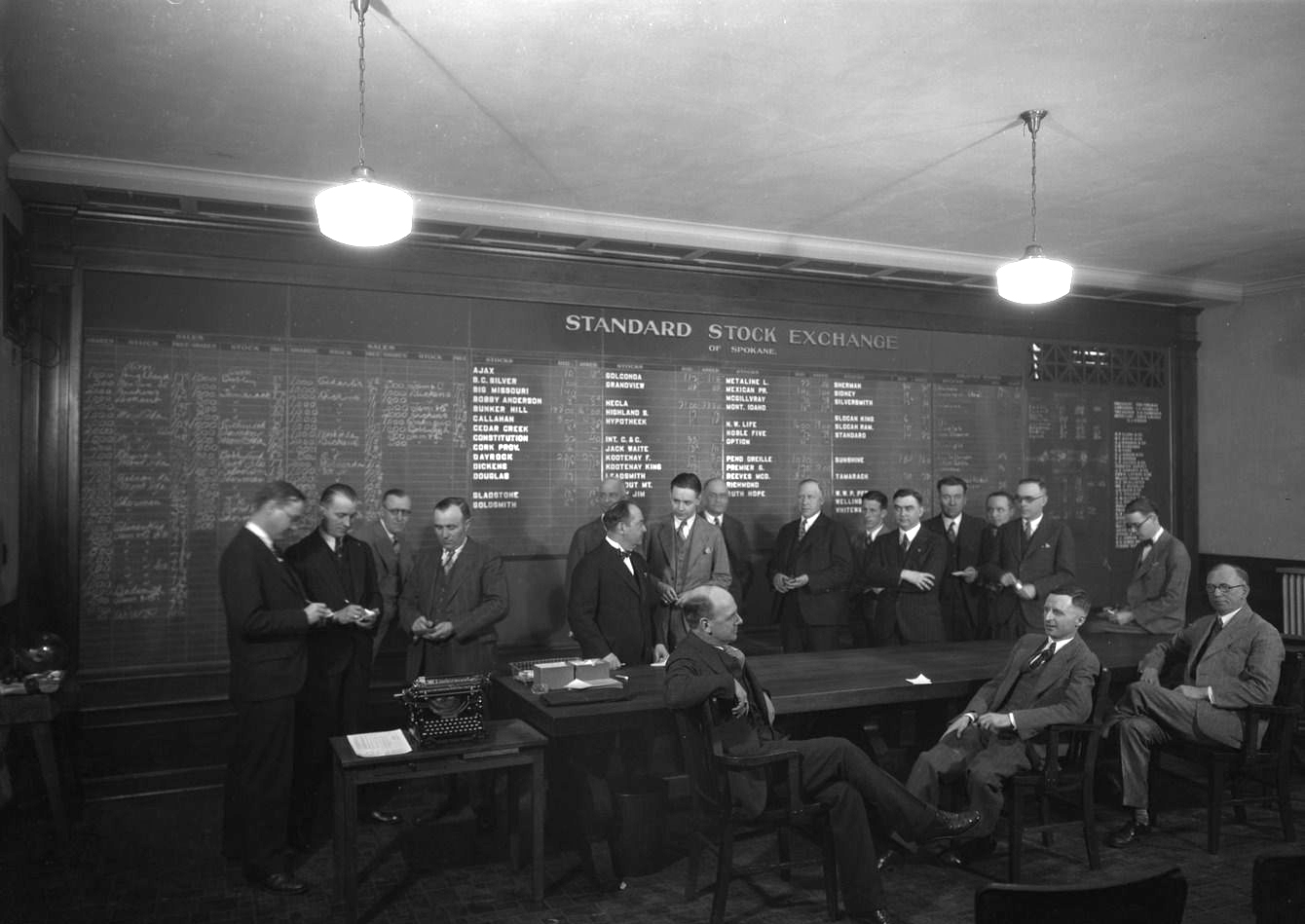
The SEC became an unavoidable presence. Its staff often conducted unannounced inspections. On one visit, James E. Newton from the SEC’s Seattle office, was shocked to find that after the public trading session brokers adjourned to a storeroom to bargain in over-the-counter stocks. The exchange soon received a sharp letter from the SEC reprimanding it for unregistered informal trading and ruling that brokers may not congregate to deal in unlisted stocks.
Mining companies who sought to be listed on the exchange had to fill out registration forms regardless of the size of the exchange. Some companies were on both the regional and New York exchanges. With double listings, significant purchases of major stocks shifted to New York. That change impacted the local sales which had yielded the biggest broker commissions. As a result, the volume of the Standard exchange fell 40 percent.
The Standard exchange began releasing to newspapers “counter quotations” which consisted of a daily summary of over-the-counter transactions based on brokers’ reports. It also adopted rules for disciplining members and barred successive transactions which were intended to create an illusion of activity. During the 1930s, the Standard Exchange had to tighten its regulations nine times to meet federal requirements and reassure its customers.
In 1938, the SEC applied the same prohibitions against deceptive practices to over-the-counter trading as it did for listed stocks. The SEC wanted precise descriptions of procedures and rules.
The Standard Stock Exchange listed 52 stocks. It also worked with 20 unlisted stocks which were all in mining except for two types. They were New World Life Insurance and the Washington Water Power Company which were classified as industrial. The exchange had no specialists, no floor traders, no trading in odd lots, no margin accounts (accounts that allow customers to buy securities with money borrowed from the broker) and no machinery for loaning securities.
In 1946, as the original Spokane Stock Exchange had severely declined, the board of the Standard Stock Exchange bought all of its remaining shares. It also “re-adopted” the name of the Spokane Stock Exchange.
The Trading Floor and Continued Use of the Chalkboard
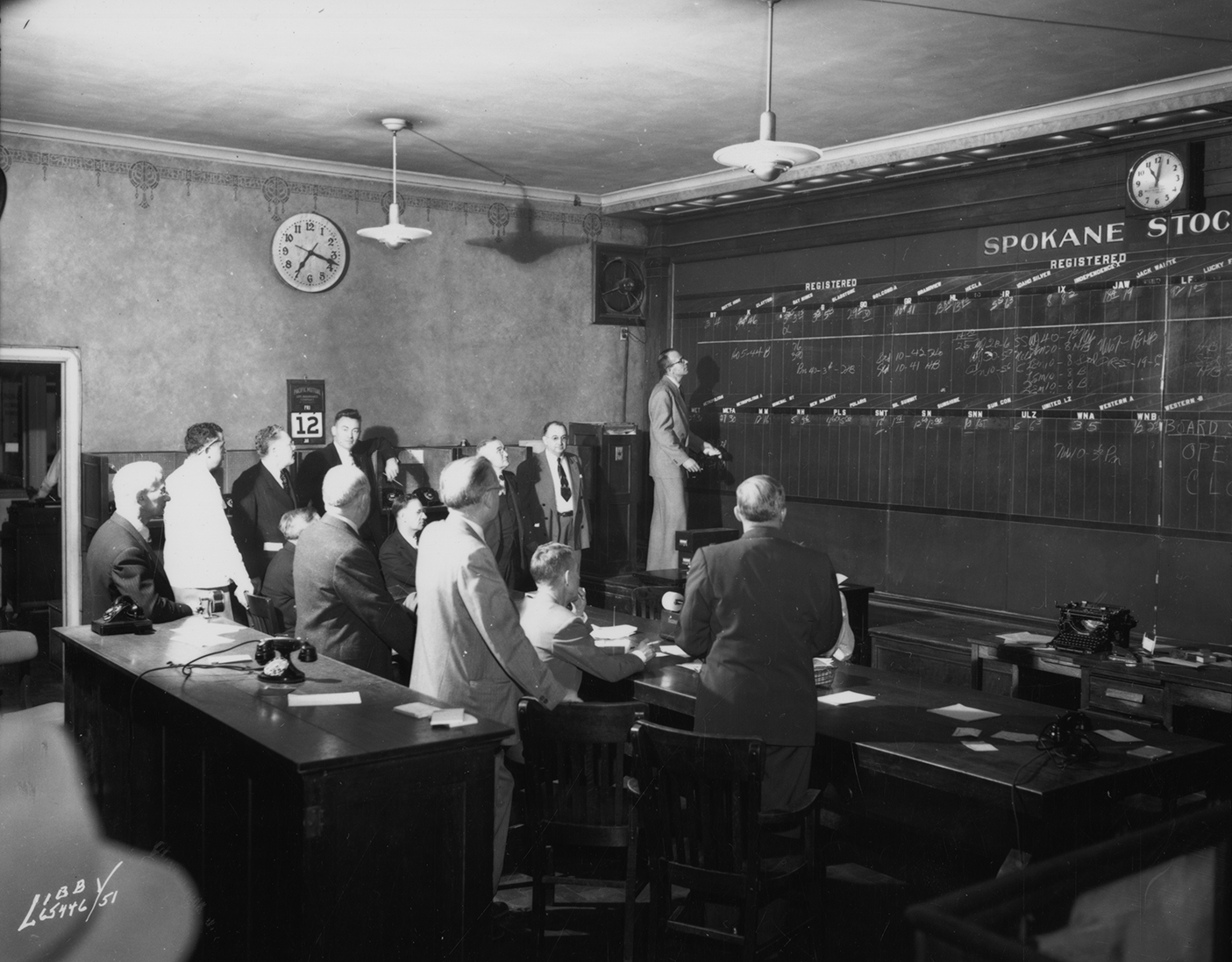
The exchange trading room was always arranged so that observers could watch quotations being posted. Spectators were granted tickets to witness the trading. They could sit or stand behind wooden railings separate from the trading floor, smoke cigars, and give orders to brokers to act on their behalf in bidding for stocks. The Spokane exchange was the only one in the nation that allowed what was referred to as “open trading”. Brokers called out stock price bids that the exchange employee repeated while marking them on a large chalkboard. The chalkboard carried the coded names of companies with stocks listed on the exchange and trades were made using it. This practice of using a chalkboard would continue through the years at the exchange.
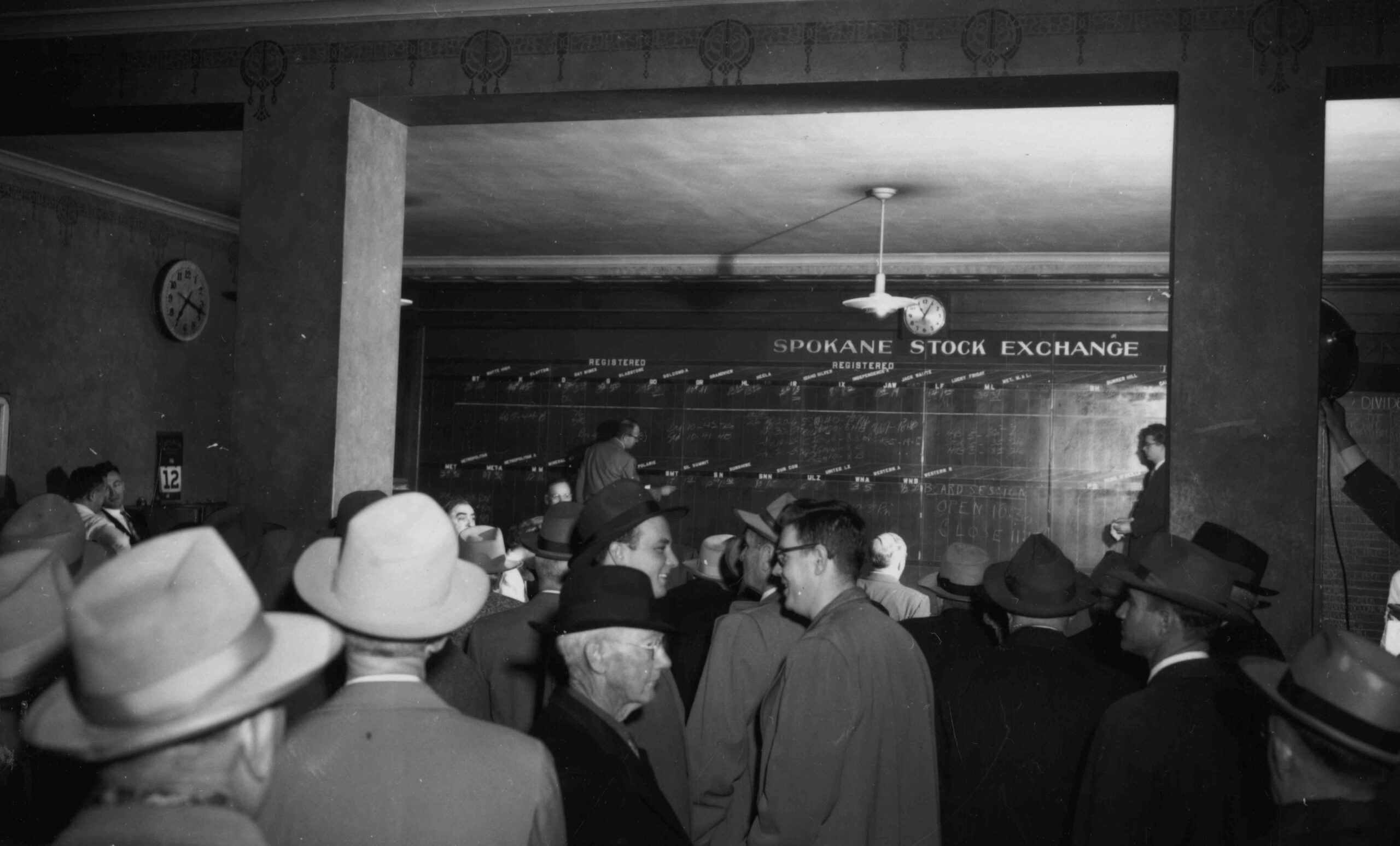
Brokers visiting Spokane for the first time would ask to see the Spokane exchange before Riverfront Park or Grand Coulee Dam. Once seeing the exchange, they came away with mixed reactions. They were accustomed to computers and digital display screens at other exchanges and the intense activity on the floors of the country’s biggest exchanges.
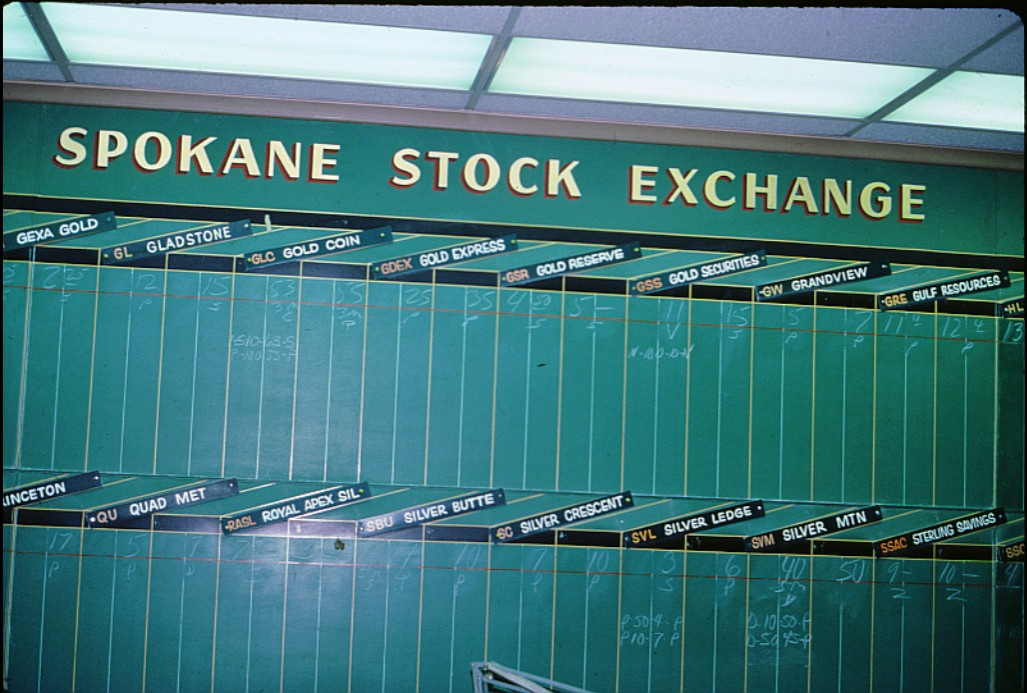
The Spokane Stock Exchange, however, seemed isolated in which it clung to customary ways of doing business. Its quotations ignored market activity elsewhere and the revitalization of the nation’s exchanges. Congress had called for a national market linking all exchanges with instant quotations.
In September, 1985, younger members of the Spokane Stock Exchange voted out the old board of governors, as they wanted to move toward an electronic trading system. However, electronic trading did not materialize even though Spokane was the largest of the few remaining registered regional mining exchanges in the United States.
Even up through the 1990s, the Spokane Stock Exchange did not computerize trading. They were the only exchange in the nation that continued to allow open trading. Spectators still stood behind a railing and called out bids directly to brokers on the floor. Then they watched the activity on the chalkboard.
Different Locations and Names of the Stock Exchange
The local exchange moved over time from one building to another.
Beginning in 1918, the exchange rented space at the Paulsen Building which is located at 421 W. Riverside.
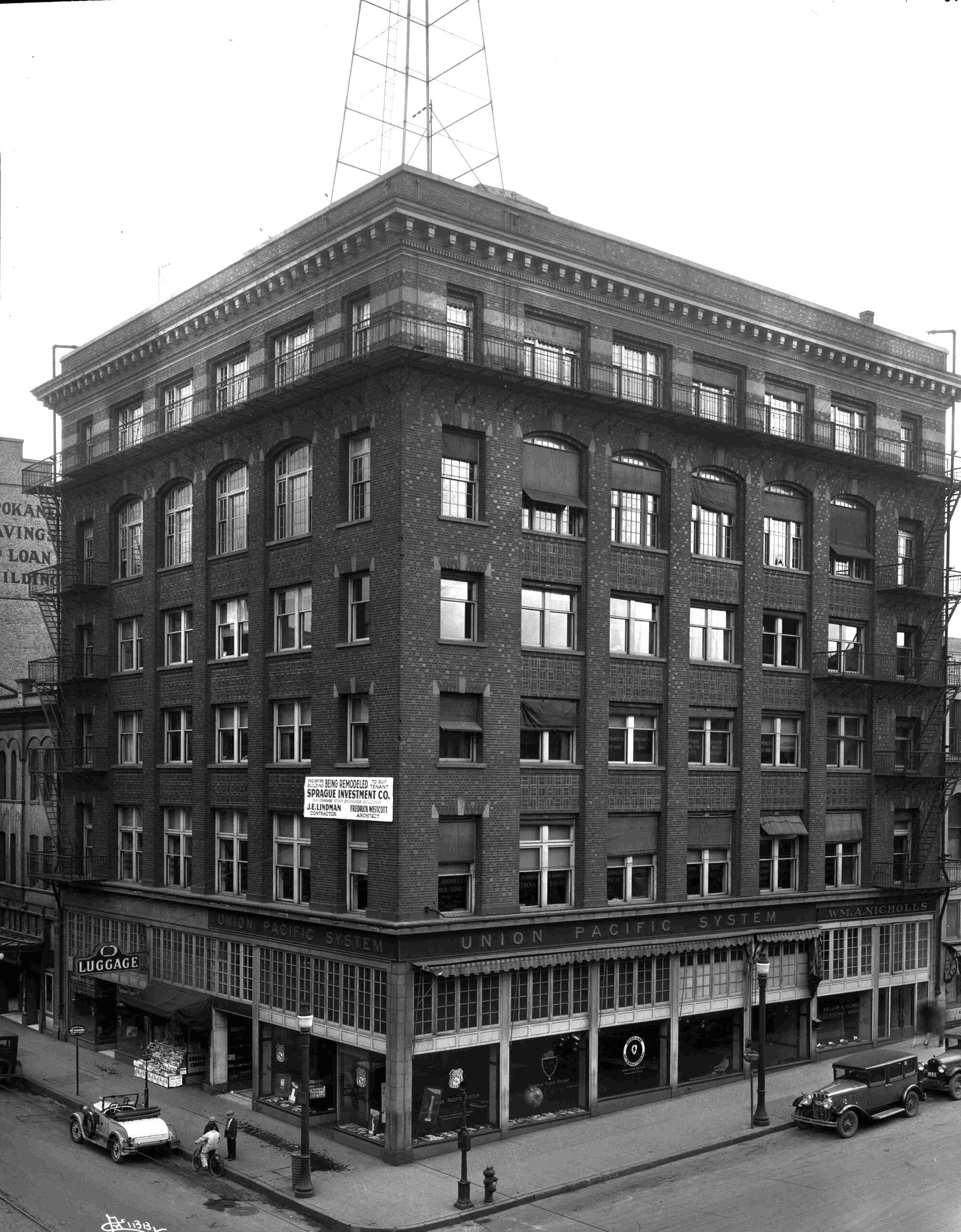
In 1929, the stock exchange was located in what was called the Eilers Building for the Eilers Music Company. The building was renamed the Standard Stock Exchange Building because it occupied the second floor of that building.
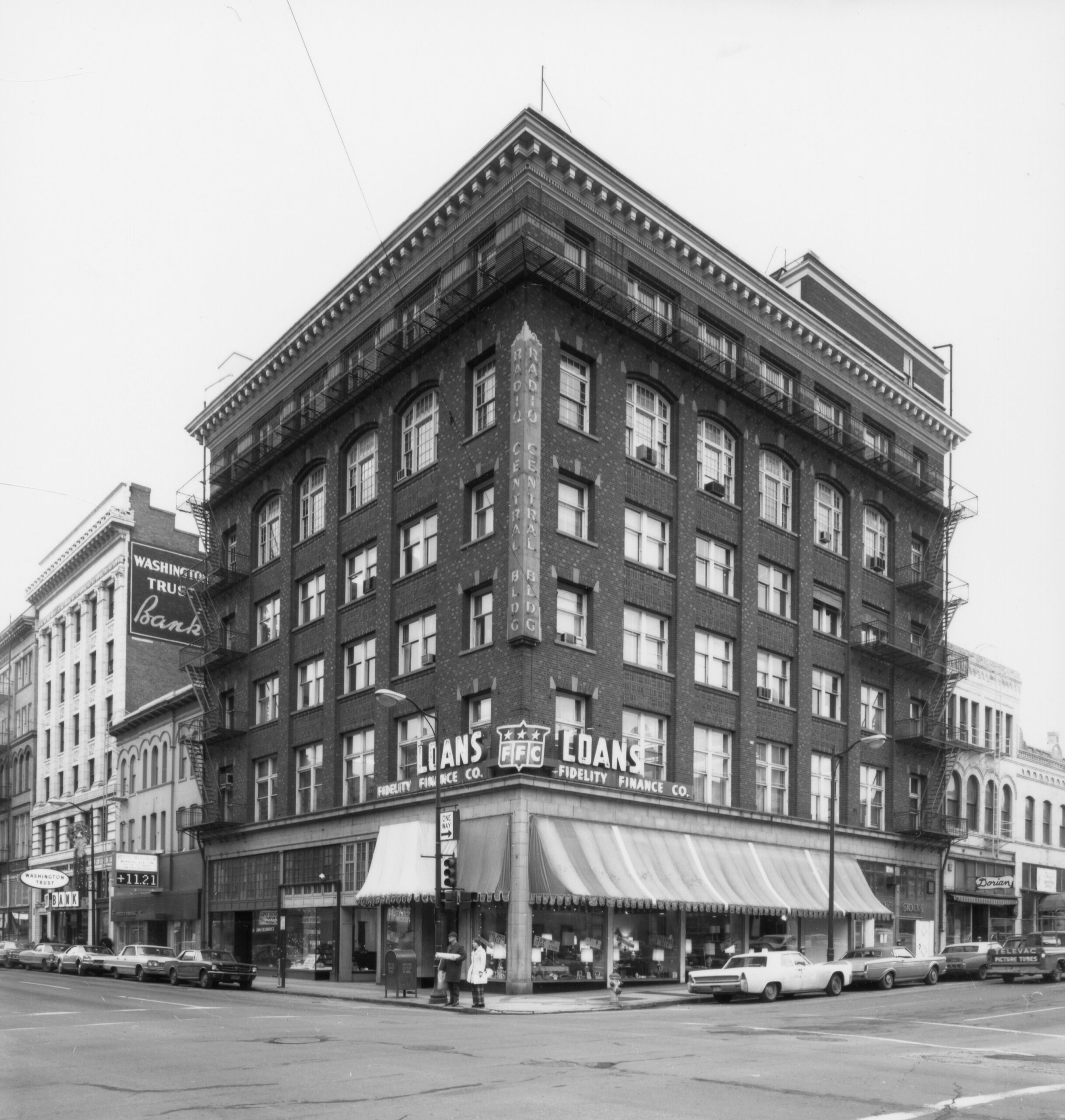
By 1935, the Standard Stock Exchange Building was home to both KGA and KHQ radio stations so it was renamed the Radio Central Building. The stock exchange continued to reside in that building until 1971. The address of the building was 725 W. Sprague.
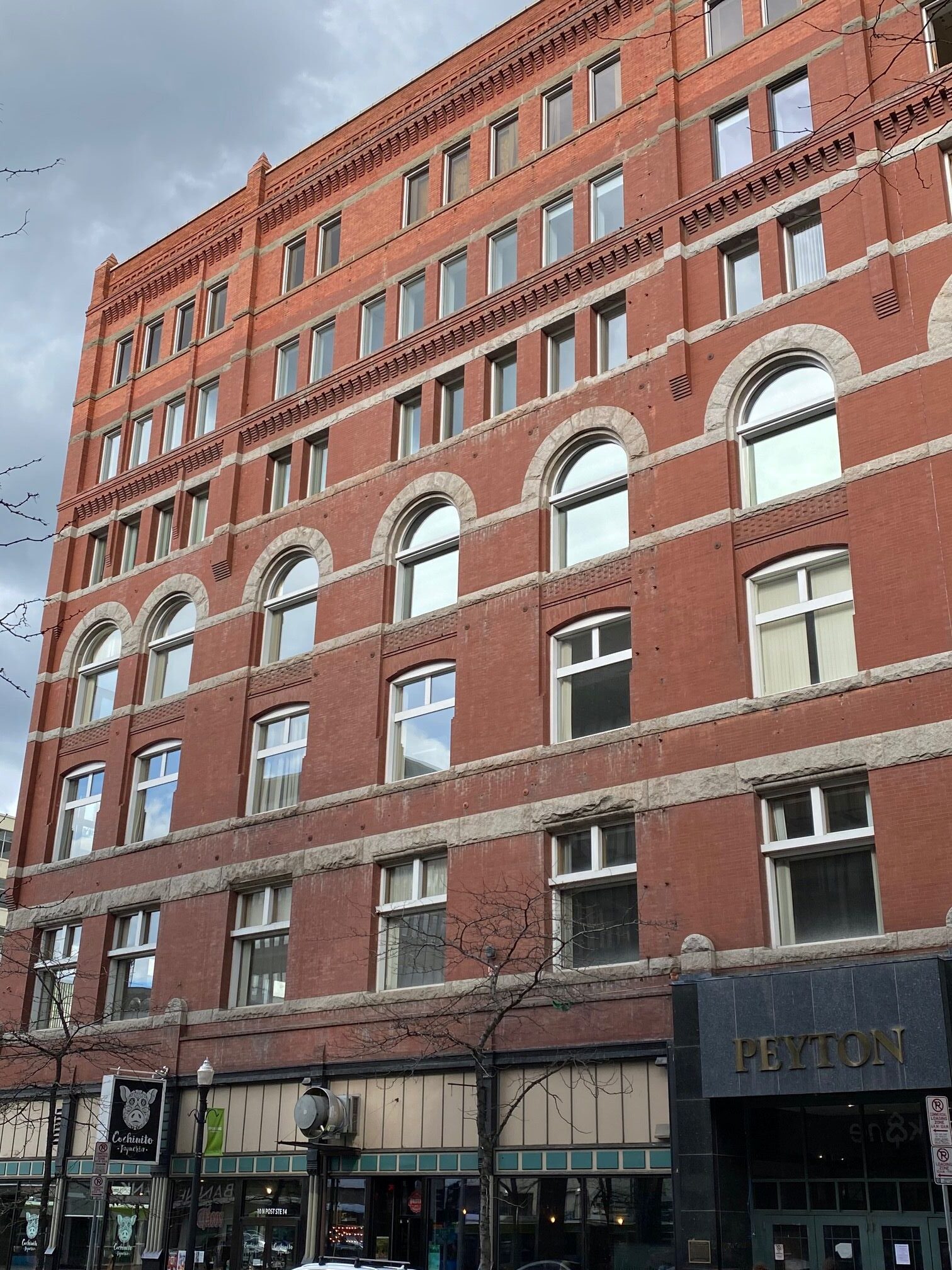
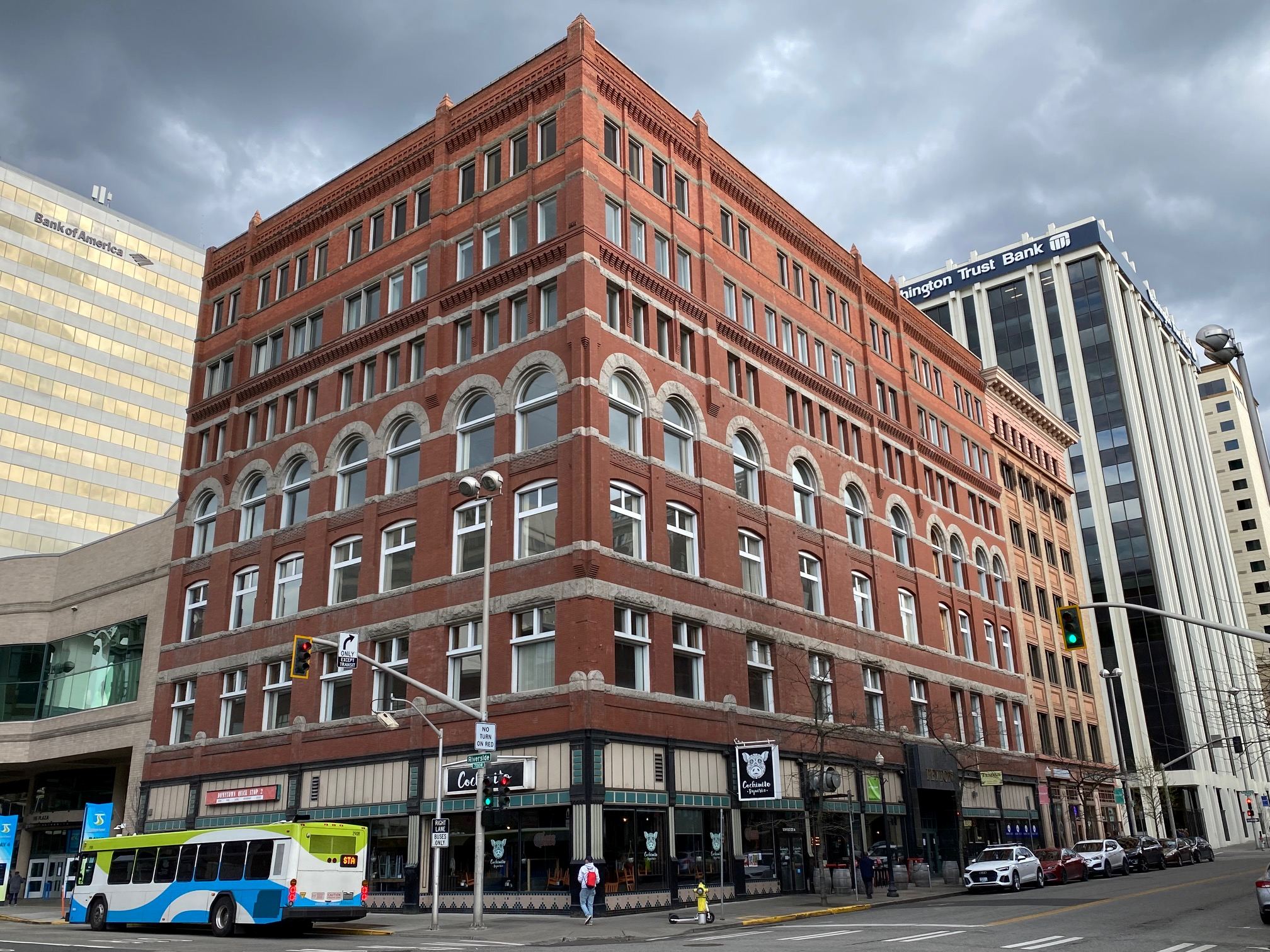
From 1972 to 1987, the Spokane Stock Exchange was located in the Peyton Building at 10 N. Post Street on the second floor.
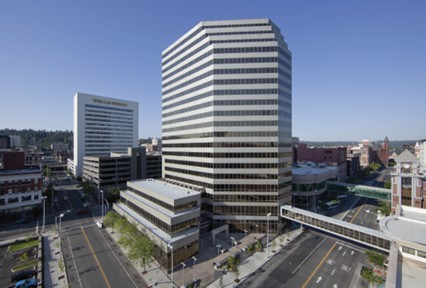
From 1987 to 1991, the Spokane Stock Exchange was located at 601 W. Riverside (formerly the Seafirst Financial Center which became the Bank of America Financial Center); the exchange was initially in Room 200. The brokers voted to move the exchange to the mezzanine floor of the building so that trading could be viewed through the windows.
The Spokane Stock Exchange Closes Its Doors
The Spokane Stock Exchange spent its last years at 601 W. Riverside.
It was viewed as out of date. Newspaper writers emphasized its archaic ways of doing business and the element of gambling present in betting on penny stocks.
There were several reasons that led up to the decision by brokers to dissolve the exchange. The major reasons included: increased SEC surveillance of the penny stock market; changes in mining finance and operations; slumping silver and gold prices; lowered investor interest; declining broker allegiance; and the pressure to move to electronic trading.
The Spokane Stock Exchange had been the smallest trading office in both the seven regional markets trading in penny stocks as well as throughout the rest of the United States. It was the last of the mining exchanges in the American West and the last without electronic trading.
At the time of its closure, it had a reputation as an exchange for trading speculative penny stocks almost exclusively in the mines of the Silver Valley in North Idaho.
The last trading day was May 24, 1991.
The Standard Stock Exchange and the Spokane Stock Exchange in different buildings under different names in downtown Spokane over time:
- 421 W. Riverside Avenue – Paulsen Building (Spokane Stock Exchange – 1918 to approximately 1929);
- 725 W. Sprague Avenue – Standard Stock Exchange Building; renamed the Radio Central Building (Standard Stock Exchange renamed Spokane Stock Exchange – 1929-1971);
- 10 N. Post Street – Peyton Building (Spokane Stock Exchange – 1972-1987);
- 601 W. Riverside Avenue – Bank of America Financial Center Building (Spokane Stock Exchange – 1987-1991).
Sources
- John Fahey, “Optimistic Imagination – The Spokane Stock Exchange”, The Pacific Northwest Quarterly, Summer 2004, pgs. 115-125;
- John Fahey, “The Longest Crap Game in the West”, Spokane Magazine, March, 1980, pgs. 37, 54, 55, 56;
- Charles Hillinger, “Spokane Stock Exchange – Oldest Crap Game in Nation”, Los Angeles Times, February 10, 1972, pgs. 28, 29;
- Laura Arksey, “Spokane Stock Exchange”, January 10, 2009, HistoryLink.org., accessed April 25, 2026 (https://www.historylink.org/File/8883);
- Spokane Stock Exchange, MS, Northwest Museum of Arts & Culture/Eastern Washington State Historical Society;
- Margaret Bean, “Mine Mart Booms – Standard Stock Exchange Sets Trade Records”, The Spokesman-Review, December 30, 1945, page 1.
- Carolyn Hage Nunemaker, Downtown Spokane Images, 1930-1949, page 60.
- Gary L. Grimmett, “25 Cents Spokane”, Unique Penny Stock Market, 1982, Spokane Public Library, pages 5-13.
- Frank Bartel, “Investigators Aim at Penny Stocks”, The Spokesman-Review, April 20, 1986, page 4.
Image Sources
- Spokane Stock Exchange, 1951, Northwest Museum of Arts & Culture/Eastern Washington State Historical Society, Charles Libby Collection, L87-1.65447-51;
- Coeur d’Alene Mining District Map, Northwest Museum of Arts & Culture/Eastern Washington State Historical Society.
- Snow Storm Mining Company Mine, 1923, Northwest Museum of Arts & Culture/Eastern Washington State Historical Society, Charles Libby Collection, L87-1.23348-23;
- Miners in the Hercules Mine, North Idaho, 1905, The State of Washington Department of Archaeology and Historic Preservation;
- Mining Cabins Near Twisp, Washington, 1909, Northwest Museum of Arts & Culture/Eastern Washington State Historical Society, Charles Libby Collection, L87-1.1.28;
- Snow Storm Mining Company Train, 1923, Northwest Museum of Arts & Culture/Eastern Washington State Historical Society, Charles Libby Collection, L87-1.23347-23;
- Spokane Stock Exchange Stock Bids, The Spokesman-Review, August 29, 1925, page 16;
- Gray Wolf Mining Company Penny Stock Certificate, 1931, Earl Bennett Stock Certificates, University of Idaho Library, accessed April 29, 2026 (https://objects.lib.uidaho.edu/stockcerts/13-018a.jpg);
- Bear Top Lead Mines Stock Certificate, 1928, Earl Bennett Stock Certificates, University of Idaho Library, accessed April 25, 2026 (https://www.lib.uidaho.edu/digital/stockcerts/items/stockcerts0428.html);
- Standard Stock Exchange Trading Floor, 1929, Northwest Museum of Arts & Culture/Eastern Washington State Historical Society, Charles Libby Collection, L87-1.38882-29;
- Spokane Stock Exchange Trading Floor with Chalkboard and Spectators, 1951, Northwest Museum of Arts & Culture/Eastern Washington State Historical Society, Charles Libby Collection, L87-1.65447-51;
- Spokane Stock Exchange Chalkboard, 1962, Northwest Museum of Arts & Culture/Eastern Washington State Historical Society, Charles Libby Collection, Identifier No. 3256.1;
- Standard Stock Exchange Building, 1929, Northwest Museum of Arts & Culture/Eastern Washington State Historical Society, Charles Libby Collection, L87-1.38889-29;
- Formerly the Standard Stock Exchange Building (Renamed the Radio Central Building; Note the Radio Central Building name on the building), 1971, Northwest Museum of Ars & Culture/Eastern Washington Historical Society, Charles Libby Collection, L87-1.1980-71;
- Peyton Building at 10 N. Post Street, Front View of Building, Author’s Image;
- Peyton Building at 10 N. Post Street, Side View of Building, Author’s Image;
- Bank of America Financial Center Building (Formerly the Spokane and Eastern Branch of the Seattle First National Bank) Built 1981, accessed April 25, 2026 (https://unicoprop.com/wp-content/uploads/2018/03/CaseStudy_PropertyManagement_BAFC-1.pdf).