
This article is a tribute to Charles H. (Harold) Morgan, who was my neighbor. He proudly served in the United States Army Air Forces in World War II. Harold was among the many men and women with a sense of duty who gave of themselves in defense of this country.
Good Neighbor Always Willing to Help
Harold loved to help his fellow man in whatever way he could. He was so talented in the areas of fixing things, gardening, and cooking. But there was much more to his past life.
Through the generosity of Harold’s family, they have provided historical documents, pictures, and even a newspaper article interview from 2004. This information enables us to go back in time to learn about the contributions of this proud Spokane veteran.
Tough Beginnings and Learning a Skill for a Life Time
Harold was born in 1921 in Ypsilanti, North Dakota, a small, unincorporated community in the southeastern part of the state. His mother died when he was 11 and he had to pretty much raise himself. He started cooking then which would be a skill he would rely on during the rest of his life.
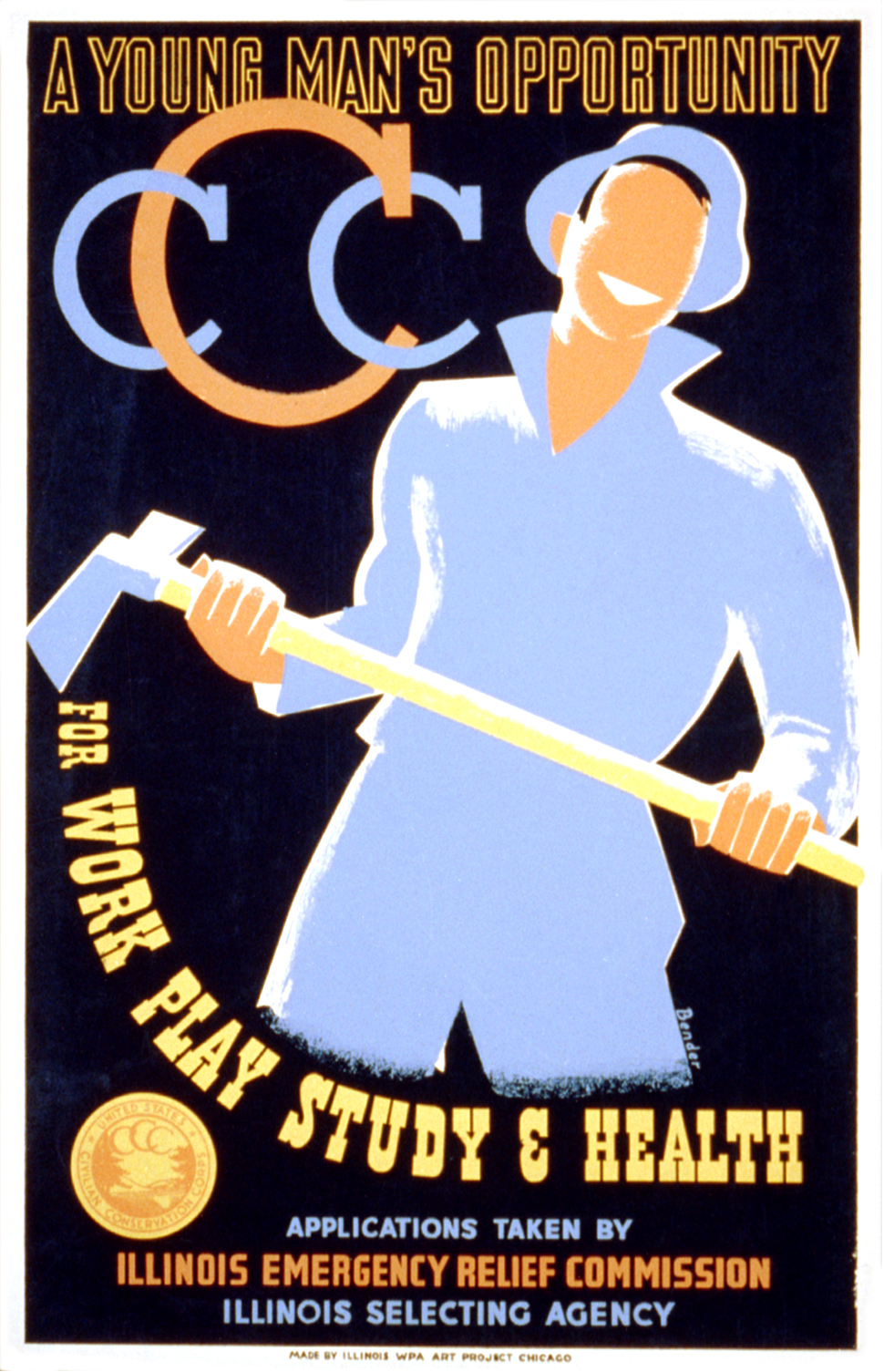
Member of the Civilian Conservation Corps
It was during the Depression in 1935 that Harold decided to leave home. As many men did in those years, he joined the Civilian Conservation Corps (CCC).
The Great Depression was a severe global economic downturn from 1929 to 1939. The period was characterized by high rates of unemployment and poverty, drastic reductions in industrial production and international trade, and widespread bank and business failures around the world.
The CCC was a government work relief program during the Depression that ran from 1933 to 1942 in the U.S. for unemployed, unmarried men the ages on average of between 17 and 28. It was a major part of President Franklin D. Roosevelt’s New Deal program. It supplied manual labor jobs related to the conservation and development of natural resources in rural lands owned by federal, state, and local governments. There was also a smaller program for unemployed women called the She-She-She Camps which were championed by Eleanor Roosevelt.
Through the course of its nine years in operation, three million young men took part in the CCC. The largest enrollment at any one time was 300,000. It provided them with shelter, clothing, food, and medical care together with a monthly wage of $30—of which $25 had to be sent home to their families. The CCC work assignments were initially six months long but later lengthened to one year.
The CCC led to a greater public awareness, appreciation, and protection of the outdoors and the nation’s natural resources. Work of the CCC can be seen in rural areas, national parks, forests, and public lands. Examples include visitor centers, camp grounds/rest rooms, and even stone fireplaces and retaining walls.
Harold worked on various projects for the Civilian Conservation Corps with Company 705 located at Cass Lake, Minnesota.

Among the work of Company 705, was the construction of a large 50-foot-high stone and timber building and stone fireplace that were completed in 1935. They are still used today as the headquarters for the U.S. Forest Service in the Chippewa National Forest.


Go West Young Man!
After his experience with the CCC, Harold ventured west and went to work for Consolidated Aircraft Corp. in San Diego, California. He was an aircraft factory bench assemblyman. He used hand drills in conjunction with working with wing parts, seats, and doors. Consolidated Aircraft Corp. had become famous in the 1920s and 1930s for its line of seaplanes also known as flying boats or patrol boats. They were quite versatile by being able to operate from both a conventional runway and water.
The most successful of the patrol boats was the PBY Catalina which was produced throughout World War II and used extensively by the Allies. The Catalinas served every branch of the United States Armed Forces and in the air forces and navies of many other nations.
The PBY was originally designed to be a patrol bomber and had the advantage of being able to land in any suitable water. It was an aircraft with a long operational range intended to locate and attack enemy transport ships at sea to disrupt enemy supply lines.


An equally famous aircraft made by Consolidated was the B-24 Liberator which was first flown in 1939. It was a four-engine bomber used by the U.S. Army Air Forces (USAAF) (formerly the U.S. Army Air Corps) and other Allied air forces during World War II. It was the most-produced Allied heavy bomber in history. The aircraft was most known for its long range, speed, and bomb-carrying capacity.

Invasion of China by the Japanese and Gradual U.S. Involvement
In 1931, Japan invaded the Chinese area of Manchuria; and in 1937, Japan launched a full-scale invasion of China. Without much of an air force, China struggled to withstand the better equipped Imperial Japanese forces.
From 1937 through 1939, Washington D.C. did very little at first to support China. U.S. officials opposed Japanese aggression but feared provoking a wider war. However, American outrage resulting in rising public pressure from journalists and missionaries in China helped shift U.S. public opinion strongly towards the Chinese cause. Public pressure gradually pushed policymakers toward more active support to China.
There was, however, U.S. neutrality laws which restricted military aid. That being said, the Roosevelt administration provided loans and credits to help China purchase supplies but President Roosevelt often had to maneuver around the legal limits to keep China going.
By 1940 and into 1941, the U.S. began officially extending credits for war supplies and tightening export restrictions on Japan using economic pressure to try to stop the Japanese expansion.
By late 1941, the U.S. sent a military advisory mission to China and agreed to help create a modern Chinese air force and maintain supply routes such as the Burma Road. The China-Burma-India geographic areas were involved in the combat operations.
Creation of the Flying Tigers
Early U.S. aid to China between 1937 and 1941 created the political, logistical, and personal foundations that had an impact on the creation of the Flying Tigers. The early support brought Claire Chennault, American funding, and U.S. strategic interest into China before the U.S. formally entered World War II.
China invited Claire Lee Chennault, a retired U.S. Army Air Corps officer, to advise its air force shortly after Japan’s invasion. His presence there meant that when the U.S. later sought ways to help China, he was already in place and ready to propose an American-staffed fighter group.
The U.S. increased loans, credits, and military advisory missions to China. The U.S. created the political cover and funding mechanisms that allowed President Roosevelt to authorize the recruitment of American pilots under civilian contracts.
The first American Volunteer Group (AVG), nicknamed the Flying Tigers, was formed to oppose the Japanese invasion of China. They formally organized in 1941. Initially, they were composed of pilots, mechanics, and support personnel drawn from the United States Army Air Corps (USAAC), the Navy (USN), and Marine Corps (USMC). The men were released from the U.S. military and they joined the AVG as civilians. The AVG was commanded by Claire Lee Chennault.
By early 1941, the U.S. was already supplying China under a “Lend-Lease” Act (1941) providing food, oil, and military equipment to Allied nations such as China without the requirement of immediate payment. It allowed the U.S. to serve as the “arsenal of democracy” while remaining officially neutral. The Act made possible aircraft, spare parts, and equipment to be sent to Chennault’s Fighting Tigers force. The Curtiss P-40B Warhawk aircraft marked with Chinese colors, flew under American control.
As the U.S. was supporting China and the Burma Road, the AVG trained in Burma in 1941. This location was chosen because of the existing U.S.-British-Chinese cooperation in keeping critical supply lines open. This cooperation later became the backbone of the China-Burma-India geographic area of combat operations where Burma was the critical lifeline to China.
The Flying Tigers specialized in aggressive “hit-and-run” tactics exploiting the P-40’s diving speed to counter more maneuverable Japanese aircraft. The P-40 Warhawks—painted with distinctive shark-mouth nose art—became symbols of resistance. Their success provided a crucial morale boost and disrupted Japanese air operations in China.


The United States Joins the War Effort
The United States entered World War II after the Japanese attacked Pearl Harbor on December 7, 1941. The attack capped a decade of escalating conflict between the U.S. and Japan.
American involvement in World War II’s air war in China was defined by a combination of strategic necessity, improvisation, and extraordinary bravery. The United States sought to keep China in the fight against Japan. Air power became the primary means of support after Japan cut off China’s land supply routes. An air campaign became central to China, Burma, and India.
Harold Joins the War Effort
In 1942, Harold joined the nation’s war effort in the United States Army Air Forces. His life took a dramatic turn going halfway around the world to support the nation’s war effort. He was stationed in exotic outposts including India, Burma, China, and the island of Tinian (Northern Mariana Islands; north of Guam in the western Pacific Ocean).
He was a Sergeant supervising the work in the mess hall preparing and cooking food as well as requisitioning and purchasing food and supplies.
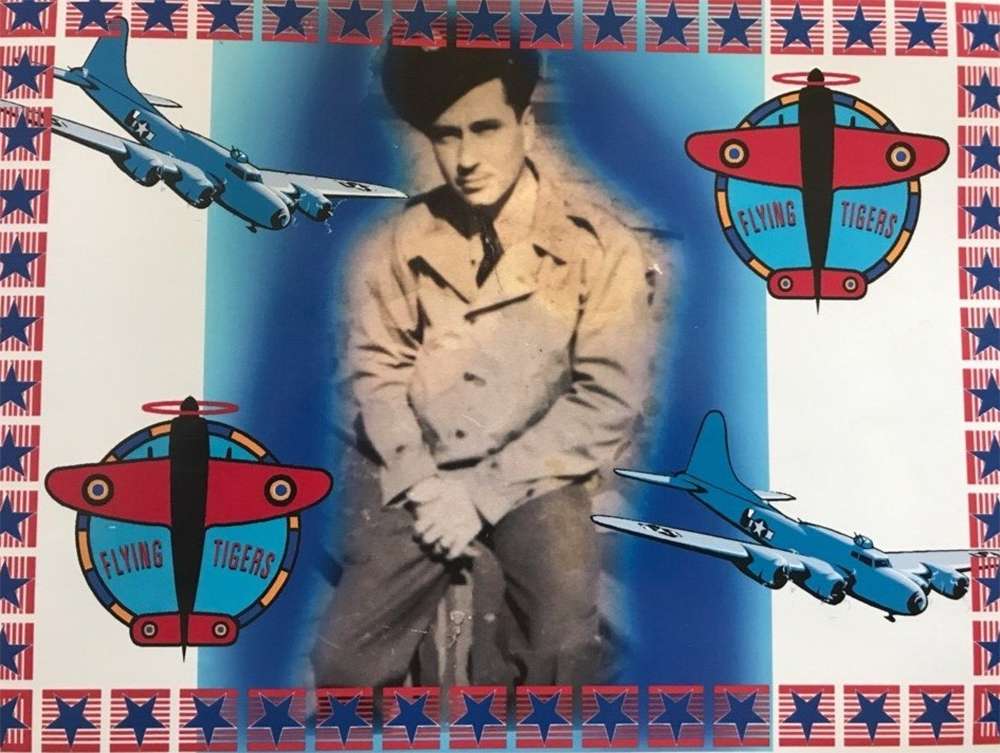
The success of the American Volunteer Group (AVG) Flying Tigers in 1941-42 led to its absorption into the U.S. Army Air Forces as the 23rd Fighter Group, later part of the Fourteenth Air Force under Chennault. At that time, the air campaign was expanded with bombing, reconnaissance, and close-air-support missions across China and Burma. These operations depended heavily on a lifeline known as the “Burma Hump”—a perilous airlift route over the eastern Himalayas.
When Japan captured Burma and severed the Burma Road, the Hump became the only way to supply China. Flying from Assam, India, to Kunming, China, transport crews braved extreme altitudes, violent storms, and unreliable navigation. Despite these hardships, the Hump airlift delivered the fuel, ammunition, and spare parts that kept American and Chinese air operations alive.
The Flying Tigers pioneering combat role and the sustained Hump airlift formed the backbone of America’s air campaign in China. It helped contain Japanese forces and shaped the broader Allied strategy in Asia.
Cooking with Chinese Cooks in Chengdu, China
In 1942, Harold arrived at a base in Chengdu, China, as part of the United States Army Air Forces mission there. He served eight months feeding air crews and spoke of the friendships he developed with what he referred to as the “top-notch” Chinese cooks he worked with in the mess halls.
Harold gave an interview in 2004 on his experience in China that appeared in the Statesman-Examiner, Colville, Washington. He was quick to state that whatever duty post he was at, the crew always ate well and he worked with good Chinese cooks. Even though his primary job was to supervise, Harold would also cook when needed.

Chengdu, China, became involved late in the war and was one of the most important U.S. air hubs in China. Chengdu was selected for the new B-29 Superfortress bombing campaign against Japan. Its role was tied to the next phase of the American air campaign—the B-29 strategic bombing effort known as “Operation Matterhorn” which required bases in both India and China.
The Massive Boeing B-29 Superfortress Bomber
The Boeing B-29 Superfortress was designed in 1940 and made its maiden flight in September, 1942. The B-29 was called the “Superfortress” because it was a larger, faster, and more heavily armed plane than the B-17 Flying Fortress. It could fly over 3,000 miles and carry up to 20,000 pounds of bombs.
It was the first U.S. bomber to feature a fully pressurized and climate-controlled cabin without the need for bulky oxygen masks or heavy electrically heated flight suits. It also featured remote-controlled machine gun turrets managed by an early analog computer system.


In December, 1943, it was decided the B-29 Superfortress would not be used in fighting the war in Europe but would remain in the Pacific and used in the war against Japan. In the Pacific, the plane’s great range made it particularly well suited for the long, over-water flights required to attack the Japanese homeland from bases in China.
Harold’s recollection of his first sighting of the B-29 Superfortress was that of a massive airplane. He wondered how something that big could get in the air. It was like nothing he had ever seen before—sleek, 100-feet long with a span of 141 feet.
In wartime, the B-29 Superfortress was capable of flight at altitudes up to 31,850 feet at speeds of up to 350 mph. This was its best defense because Japanese fighters could barely reach that altitude. Few Japanese planes could catch the B-29 even if they did attain that altitude. The B-29 was considered one of the finest bombers in the skies in the 1940s.
B-29 Operational History
The “Operation Matterhorn” plan was implemented the end of 1943 at the direction of President Roosevelt. The plan had B-29 units attack Japan from four forward bases in southern China, five main bases in India, and to attack other targets in the region from China and India as needed.
The Chengdu region was chosen over the Guilin region to avoid having to raise, equip, and train 50 Chinese divisions to protect the advanced bases from Japanese ground attack.
Supplies were flown over the Himalayas also by B-29s. Some aircraft were stripped of armor and guns and used to deliver fuel. The first B-29 flight to airfields in China over the Himalayas (“The Hump”) took place on April 24, 1944. The first B-29 combat mission was flown on June 5, 1944, with 77 out of 98 B-29s launched from India bombing the railroad shops in Bangkok, Thailand, and elsewhere in Thailand.

B-29 Superfortress Launching Point on the Island of Tinian
As the war progressed, the Allied forces moved closer to Japan. The Japanese forces were pushed back toward the Japanese homeland. The Philippines along with Saipan, Guam and Tinian were taken by Allied forces.
The tiny Pacific island of Tinian, in the Northern Mariana Islands, was the launching point of wave after wave of B-29 Superfortress bombers running bombing missions called “sorties” over Japan. In military aviation, a sortie is a combat mission of an individual aircraft starting when the aircraft takes off.
During the last two months of 1944, B-29s fought against Japan from the islands of Saipan, Guam, and Tinian. Harold ran the officer’s mess hall in Tinian and fed the hungry crews which flew on these missions.

The Top Secret Atomic Bombs
Harold did not know that atomic bombs were going to be dropped on Japan. All he knew was that the B-29 crews would take off from Tinian to bomb Japan. Those crews had to fly most of the night to get to their targets in Japan. Harold’s job was to help feed those hungry B-29 flight crews.
B-29 Superfortress Enola Gay
A B-29 Superfortress was named Enola Gay after the mother of the pilot, Colonel Paul Tibbets. Colonel Tibbets hand-selected the aircraft off the assembly line at the Glenn L. Martin Company assembly plant in Omaha, Nebraska, in May, 1945. When it came time to assign a name to the plane, he chose his mother’s name, as she always supported his decision to become a military pilot.
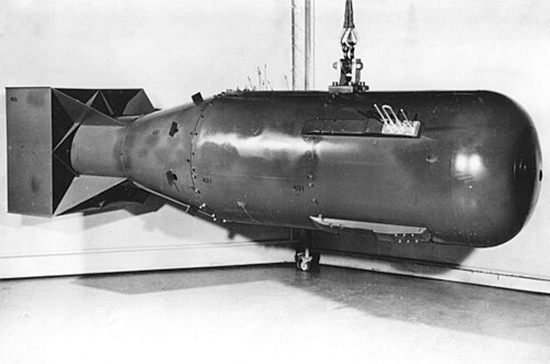
The Enola Gay is famously known for dropping the “Little Boy” atomic bomb over Hiroshima, Japan, on August 6, 1945. The “Little Boy” was a uranium-based gun-type bomb.

B-29 Superfortress Bockscar
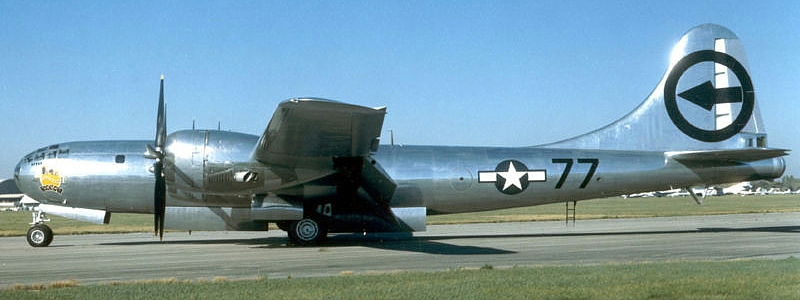
A B-29 Superfortress was also named Bockscar after Captain Frederick C. Bock (sometimes called Bock’s Car). Captain Bock never flew the plane. He traded aircraft with Major Charles W. Sweeney whose regular plane was The Great Artiste which was an observation and instrumentation aircraft. Major Sweeney flew the Bockscar which was famously known for dropping the “Fat Man” atomic bomb over Nagasaki, Japan, on August 9, 1945. The “Fat Man” was an implosion-type weapon that required a large spherical arrangement of explosives surrounding a plutonium core that made it very fat (approximately 11 feet long and 5 feet in diameter).

An Honorable Discharge at the War’s End
Harold was discharged from the army in 1945. His Honorable Discharge record referenced Air Offensive battles in Indonesia, Burma, China, and Japan. He was decorated with a Good Conduct Medal, three Overseas Distinguished Service Bars, and a World War II Victory Medal.
When the war ended and he was at his duty post on Tinian, he was able to fly home on a B-29 Superfortress and was discharged in Portland, Oregon, on November 2, 1945. From Portland, Harold made his way to Spokane, as his brother, Cecil, lived there.
Civilian Life
Once in Spokane, Harold met Jessie Belle who became his wife in the same year. Harold and Jessie raised four children—two boys and two girls. He instilled in the boys the duty to serve their country. Both sons served in various capacities in Vietnam.
A Business Venture
With his cooking experience, Harold and Jessie along with Cecil with his wife Ann went into business in 1946 serving home-cooked food at an establishment on Monroe Street near the Spokane County Courthouse.
31 Years at Kaiser Aluminum
Harold’s experience as a business owner did not last long. In 1946, he was hired by Kaiser Aluminum & Chemical Corporation to work at their Trentwood facility. At Kaiser, he worked in the area of maintenance as a millwright for 31 years fixing equipment that made aluminum. Harold retired in 1977 at 57 years of age.
Retirement, Community Service, and a Long Life
Harold enjoyed retirement. He was always there to help people in need including doing odd jobs, donating food to local charities, cleaning snow off neighbors’ walkways, and being the neighborhood handyman.
For many years, Harold had a large fruit and vegetable garden which he carefully tended from April through October. He generously shared his harvest with the neighborhood and those in the community.
Harold and Jessie also spent time at their other home in Colville, Washington. They tended their garden, canned fruits and vegetables, and fished in the nearby lakes. Harold and his son would also go hunting in the fall.

The less stress, in combination with eating right, exercising, and being of help in the community were elements which contributed to his living 99 years. His wife, Jessie, also shared his interests and lived to be 98 years of age herself.
Military Service Recognition
Harold was recognized for his service with an Honor Flight to Washington D.C. in 2010. He saw the National World War II Memorial with his son and grandson.

A Life Well Lived
Harold passed away on March 19, 2020, at 99 years of age—a day after his birthday on March 18.
Harold Morgan’s story reminds us of how profoundly an ordinary life can become extraordinary through courage, service, and generosity. From the hardships of his youth to the far reaches of India, Burma, China, and Tinian, he carried with him a steadfast sense of duty and a quiet strength that shaped every chapter of his journey.
His legacy lives on not only in the history he helped make but in the countless acts of kindness he offered as a neighbor, friend, husband, father, and veteran. In honoring Harold, we honor the enduring spirit of those who served and the lasting impact of life lived with purpose, humility, and heart.
Sources
- Chris Cowbrough, “WWII Revisited”, Statesman-Examiner, Colville, WA, July 7, 2004, page 1-3;
- Boeing B-29 Superfortress, Wikipedia, accessed May 18, 2026 (https://en.wikipedia.org/wiki/Boeing_B-29_Superfortress);
- P40 Warhawk of Claire Chennault’s Flying Tigers, Reddit, accessed May 16, 2026 (https://www.reddit.com/r/WWIIplanes/comments/czu4a8/p40_warhawk_of_laire_chennaults_flying_tigers/#lightbox);
- Flying Tigers, Wikipedia, accessed May 9, 2026 (https://en.wikipedia.org/wiki/Flying_Tigers);
- Civilian Conservation Corps, Wikipedia, accessed May 16, 2026 (https://en.wikipedia.org/wiki/Civilian_Conservation_Corps);
- B-29 Superfortress Enola Gay, Wikipedia, accessed May 17, 2026 (https://en.wikipedia.org/wiki/Enola_Gay);
- B-29 Superfortress Bockscar, Wikipedia, accessed May 17, 2026 (https://en.wikipedia.org/wiki/Bockscar);
- Chippewa National Forest HQ, Cass Lake, MN (Schroeder Log Home Supply; Blogger.com), accessed May 17, 2026 (https://loghelp.blogspot.com/2012/01/iconic-logs-chippewa-national-forest-hq.html);
- Consolidated PBY Catalina, Wikipedia, accessed May 17, 2026 (https://en.wikipedia.org/wiki/Consolidated_PBY_Catalina);
- B-24 Liberator, Wikipedia, accessed May 16, 2026 (https://en.wikipedia.org/wiki/consolidated_B-24_Liberator);
- Works Progress Administration (WPA), Wikipedia, accessed May 26, 2026 (https://en.wikipedia.org/wiki/Works_Progress_Administration);
- The Great Depression, Wikipedia, accessed May 26, 2026 (https://en.wikipedia.org/wiki/Great_Depression);
- Harold Morgan’s family members provided historical information as well as images.
Image Sources
- Featured Image: Harold Morgan Flying Tigers Photograph, 1942, from Family Photo Collection;
- Albert M. Bender, Illinois Works Project Administration (WPA) Art Project Chicago, 1935, Civilian Conservation Corps Poster, Wikipedia, accessed May 16, 2026 (https://en.wikipedia.org/wiki/Civilian_Conservation_Corps);
- CCC Company 705 at Cass Lake, Minnesota (Harold is on the far right); Morgan Family Photo Collection;
- Chippewa National Forest HQ Building, Cass Lake, MN (Schroeder Log Home Supply; Blogger.com); accessed May 17, 2026 (https://loghelp.blogspot.com/2012/01/iconic-logs-chippewa-national-forest-hq.html);
- Chippewa National Forest HQ Stone Fireplace, Cass Lake, MN (Schroeder Log Home Supply; Blogger.com); accessed May 17, 2026 (https://loghelp.blogspot.com/2012/01/iconic-logs-chippewa-national-forest-hq.html);
- Consolidated PBY Catalina, Consolidated Aircraft Corp. USAF PBY Catalina (USAAF OA-10 with Crew), 1936-1945, Wikipedia, accessed May 16, 2026 (https://en.wikipedia.org/wiki/Consolidated_PBY_Catalina);
- Consolidated PBY Catalina, Consolidated Aircraft Corp. USAF PBY Catalina, Prototype Model 28 XP3Y-1 Flying Boat Later Modified and Redesignated XPBY-1; 1936-1945, Wikipedia, accessed May 16, 2026 (https://en.wikipedia.org/wiki/Consolidated_PBY_Catalina);
- Adam Estes, “Today in Aviation History: First Flight of the Consolidated B-24 Liberator, 1940-1945, VintageAviationNews.com, December 29, 2024, accessed May 17, 2026 (https://vintageaviationnews.com/warbird-articles/today-in-aviation-history/today-in-aviation-history-first-flight-of-the-consolidated-b-24-liberator.html);
- P40 Warhawk of Claire Chennault’s Flying Tigers, 1939-1945, Reddit, accessed May 16, 2026 (https://www.reddit.com/r/WWIIplanes/comments/czu4a8/p40_warhawk_of_laire_chennaults_flying_tigers/#lightbox);
- Third Squadron Flying Tigers’ Hell’s Angels over China in 1942, Wikipedia, accessed May 16, 2026 (https://en.wikipedia.org/wiki/Flying_Tigers);
- Harold Morgan Flying Tigers Photograph, 1942, from Family Photo Collection;
- Chengdu, China, Harold with Chinese Cooks in 1942 (Harold is standing second from the right); Morgan Family Photo Collection;
- Chris Cowbrough, “WWII Revisited”, B-29 Superfortress, 1942-1945, in Flight over Target Area, Statesman-Examiner, Colville, WA, July 7, 2004, page 1-3;
- Boeing B-29 Superfortress, 1942-1945, on the Ground, Based at Davis-Monthan Air Force Base, Tucson, Arizona, Wikipedia, accessed May 17, 2026 (https://en.wikipedia.org/wiki/Boeing_B-29_Superfortress);
- Radias of Operations for B-29 Bases, Wikipedia, accessed May 16, 2026 (https://en.wikipedia.org/wiki/Boeing_B-29_Superfortress);
- Officers’ Mess Hall Personnel in 1944 in Tinian, Northern Mariana Islands (Harold is standing in the back row sixth from the left); Morgan Family Photo Collection;
- B-29 Superfortress Enola Gay, 1945, Landing at Its Army Air Forces Base on Tinian, Wikipedia, accessed May 17, 2026 (https://en.wikipedia.org/wiki/Enola_Gay);
- The “Little Boy” Atomic Bomb, Deployed by B-29 Enola Gay on August 6, 1945 over Hiroshima, Wikipedia, accessed May 16, 2026 (https://en.wikipedia.org/wiki/Boeing_B-29_Superfortress);
- B-29 Superfortress Bockscar, Wikipedia, accessed May 16, 2026 (https://en.wikipedia.org/wiki/Bockscar);
- The “Fat Man” Atomic Bomb, Deployed by the B-29 Superfortress Bockscar over Nagasaki, August 9, 1945, Wikipedia, accessed May 16, 2026 (https://en.wikipedia.org/wiki/Boeing_B-29_Superfortress);
- Harold and Jessie Morgan with a Bountiful Crop from the Garden, 2003, author’s image;
- Harold and Grandson in Washington D.C. in 2010 at the New WWII Monument, Harold Morgan Family Photo Collection.