
Spokane had what it took to successfully host three major ice skating competitions in a relative short amount of time. Those successes have cemented its reputation as a premier venue for hosting events.
If Expo’74 hadn’t happened, the championships might not have occurred. The blueprint of an open, accessible downtown was drawn up by economic development interests in the 1960s that resulted in Expo’74. It gave Spokane an early experience of hosting large events.
Spokane’s vibrant downtown and beautiful Riverfront Park were taken into consideration in it being selected for the skating events. The close proximity within walking distance of the skating venues, lodging, and dining were strong points in Spokane’s favor.
This article provides an analysis of the success factors for the 2002 Skate America event and the 2007 and the 2010 U.S. Figure Skating Championships which I attended having had a competitive figure skating background myself.
Since the 2010 championships, Spokane has continued to remain the record holder for the all-time attendance record of 158,170 ice skating fans for the U.S. Figure Skating Championships event.
An Historic Look at U.S. Figure Skating
The official “competitive” structure of the championships we know today started on March 20, 1914 in New Haven, Connecticut. While amateur ice skating had been a popular American sport since the colonial days, a European “International Style” of figure skating—an artistic blend of dance and technical skill performed on ice which focused on graceful, sweeping movements, musical timing, and athletic jumps—was first pioneered by American-born skater Jackson Haines in the 1860s.
Before 1914, American skaters primarily performed stiff, rigid movements called the “American Style”. Victorian sensibilities prevented the Haines’ style of skating from becoming popular in the U.S. during his lifetime but proved to be a hit in Europe where Haines traveled extensively.
The onset of World War I halted the U.S. Figure Skating Championships after its debut. The championships did not resume until 1918 but the 1914 competition remains documented as the official start date of it.
U.S. Figure Skating which was founded in 1921, regulates, governs, and defines and maintains the standards of skating proficiency. Although the official name of the organization is “the United States Figure Skating Association”, it is now known as and conducts business under the name of “U.S. Figure Skating”.
It specifies the rules for testing, competitions, and all other figure skating related activities. It also assists athletes, appoints officials, organizes competitions, exhibitions, and other figure skating events and programs. Athletes and officials who represent the United States at international competitions are selected by U.S. Figure Skating.
The championships are the nation’s most prestigious figure skating events. The national champions are crowned in Men’s and Ladies’ Singles, Pairs, and Ice Dancing in each of the senior, junior and novice divisions. Medals are awarded: gold for first place; silver for second place; bronze for third place, and pewter for fourth place.
Ice Skating Requirements for Singles, Pairs and Ice Dancing
The ice skating requirements summarized in this article are for the senior category. The requirements for the other categories may or may not vary.
Singles Skating:
Singles figure skating focuses on individual athleticism, artistic expression, and technical skill involving jumps, spins, and footwork. The International Skating Union (ISU) requires skaters to complete two distinct segments:
- Short Program (2 minutes, 40 seconds; worth 1/3 of score)
The short program consists of seven required elements: axel jump; solo jump (quadruple or triple for men; triple for women); jump combination; flying spin; solo spin; spin combination; and step sequence. - Free Skate Program (women and men 4 minutes; worth 2/3 of score)
It emphasizes a well-balanced mix of creativity and maximum technical difficulty. Skaters must perform up to 12 elements consisting of: seven jumps (including an axel and up to three jump combinations); three spins; one step sequence; and one choreographic sequence (creative sequence featuring spirals, spread eagles, hydroblading).
Pairs Skating:
Pairs ice skating requires a combination of lifts, throw jumps, solo jumps in unison, spins, step sequences, and death spirals. There are two distinct segments as defined by the International Skating Union:
- Short Program (2 minutes, 40 seconds; worth 1/3 of score)
There are seven specific required elements that change each season which typically include a ¾ lift, a twist lift, a throw jump, a solo jump, a spin combination, a death spiral, and a step sequence. - Free Skate (4 minutes, 30 seconds; worth 2/3 of score)
Up to 11 elements including a maximum of three lifts, one twist lift, two different throw jumps, solo jumps and combination jumps, one pair spin combination, one death spiral, and a choreographic sequence.
Ice Dancing:
Ice dancing requirements focus heavily on musicality, intricate edge work, and partner unison. Overhead pair lifts, throw jumps, and multi-rotational solo jumps are prohibited. The focus is on intricate footwork, precise timing, and musicality. Skaters must remain in recognizable dance holds throughout most of the program with limited, brief separations.
Competitions are split into two segments: Rhythm Dance (which features a themed musical rhythm that changes every season) and the Free Dance.
Per the International Skating Union (ISU) Communication No. 2795, the technical elements required for international senior-level competitions include:
- Rhythm Dance (2 minutes and 50 seconds; worth approx. 40 percent)
The Rhythm Dance requires skaters to perform to a designated seasonal theme and include five required elements: one pattern dance element, one dance lift, one step sequence, one set of sequential twizzles, and one choreographic rhythm sequence. - Free Dance (4 minutes; worth approx. 60 percent)
Teams select their own music style to demonstrate their artistic interpretation and technical precision. A well-balanced free dance requires the following elements: dance lifts (a combination of short lifts or one combination lift), one dance spin, two step sequences, one set of synchronized twizzles, and choreograph elements.
Judging the Skaters
Scoring in ice skating evolved through the years from a 6.0 system to the International Skating Union (ISU) Judging System that was introduced in 2004.
The 6.0 system was developed in the early days of the sport when skaters traced figures on the ice. Marks were awarded based on a standard of 6.0 as perfection. It was a placement-judging system in which scores were awarded based on how each skater compared to others in the same competition, not on any absolute scale. The 6.0 system came to represent skating perfection and served as every skater’s goal.

In 2004, the International Skating Union (ISU) voted to change the 6.0 judging system because it was considered too subjective.
The (ISU) Judging System was instituted as a result of the 2002 Winter Olympics figure skating scandal in which allegations of vote swapping occurred which led to one judge’s score being discarded. The French judge was implicated for collusion, guilty of misconduct, and was suspended.
As a result, the ISU Judging System was created in which skaters and teams were scored based on a technical grade of execution of the required elements. It was developed to enable competitors accumulate points based on the degree of difficulty (base value) of each technical element. The technical element depends on the type and complexity as well as how well skaters execute each element (grade of execution or GOE) and overall skating ability.
The program component score ranges from .25 to 10 for each of five elements (transitions, interpretation, choreography/composition, skating skills, and performance/execution); ice dancing uses a sixth component score for timing.
For the total score, nine out of 12 judges are randomly and anonymously selected by computer. The scores of the other three judges are thrown out. In addition to the judging panel, there is a technical specialist (identifies each element), technical controller (oversees the technical specialist), and the referee (oversees the judges to make sure they follow the proper procedure). The ISU Judging System does not compare a skater’s skills and performance to that of other skaters in the competition.

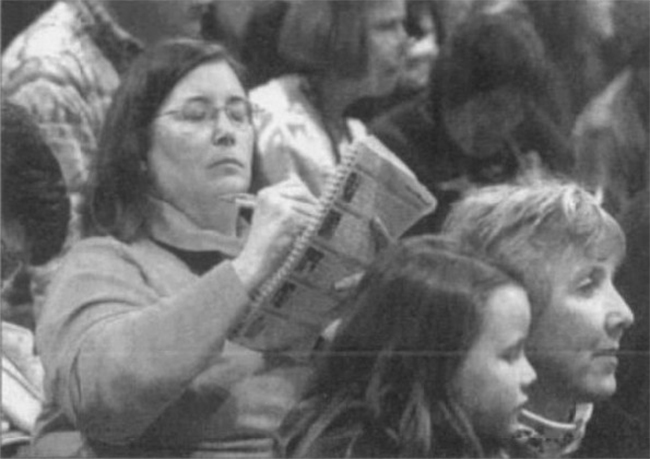
However, despite the use of the point system, there is still a subjective element involved in the judging. This subjective element can still result in the difference between first and second place particularly in very high-stakes, close competitions. Since the judging system was changed, there have been instances where mis-judging took place and the wrong skaters won.
Bird’s Eye View of the Events and What to be Looking For
I chose to watch the championships in seats that were near the top of the arena often referred to as the “nosebleed” section. The elevated view enabled me to see the entire programs of the skaters. It was more of a broader view than sitting close the rink surface. I also took my binoculars with me so that I could see the performances close up in detail.
The things to be looking for when observing the Men’s and Women’s individual events are:
- Jumps: speed, position in the air, landing position, and amount of ice covered;
- Spins: position, speed, centered revolutions;
- Step Sequences: speed, position, and clean edges.
For Pairs skating, the partners are to be skating in unison when they are performing overhead lifts, throw jumps and spins. The key to Pairs skating is exact timing and simultaneous movements.
For Ice Dancing, the emphasis is on rhythm, interpretation of the music and precise steps. The couple remains in contact almost throughout their program.
Comradery with the Audience at the Practice Sessions
It was also fascinating to watch the practice sessions leading up to the competitions. They gave the audience a chance to identify the top competitors in each of their specific events.
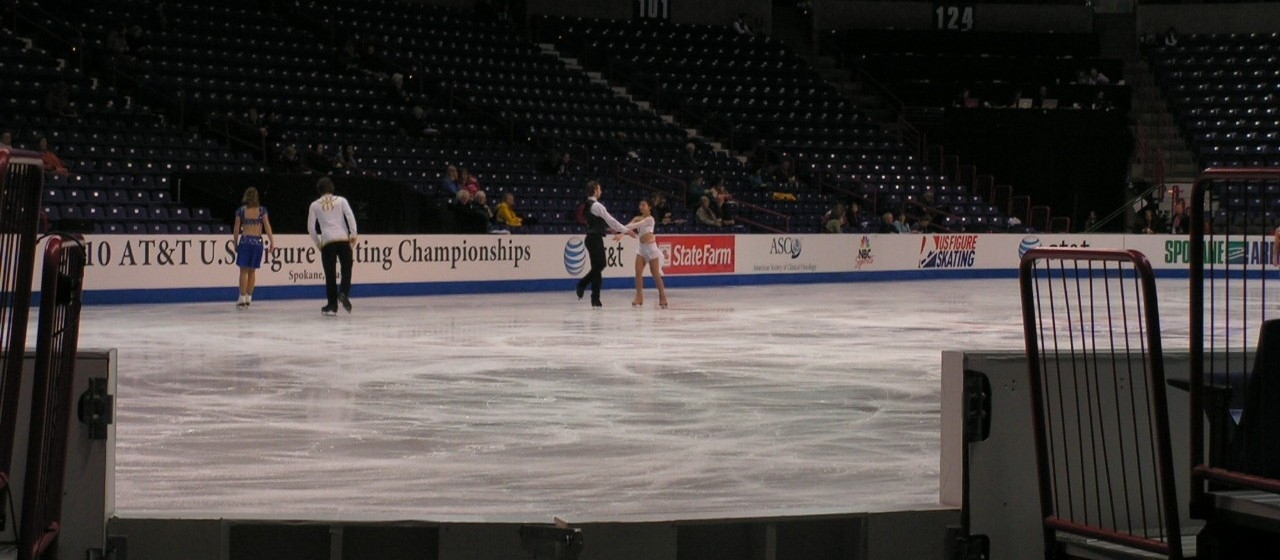
There was a lot of comradery in coming together as a community for those major skating events. I enjoyed talking with those sitting around me in between and after the skating performances to compare notes on who we thought would advance to the finals and ultimately win.
The Importance of Sport Psychologists
I also had the opportunity to sit next to a sport psychologist who specialized in skating psychology to help skaters overcome the anxiety that comes with competing. Sport Psychologists help skaters develop ways of mental preparation to “zone out” while waiting to perform so that their nerves don’t take over.
Some methods used by skaters to keep calm right before skating their programs in competitions includes: visualization by going through their programs and listening to music to keep their minds focused; a mindset of thinking “just another practice session”; engaging “muscle memory” which is like skating on “automatic pilot” knowing their programs so well having skated them so many times.
The “mental” part of skating is just as important—and perhaps even more so—than the physical side. Skaters can have practiced their routines many times in preparation for skating competitions in which they successfully complete all their skating elements. However, without good mental preparation the nerves can take over during the competitions resulting in disappointing performances. Thus, good mental preparation is also vital to skating success.
However, despite good mental and physical preparation, there still have been times when skaters did not perform as they would have liked leading to feelings of frustration and failure. In those situations, the most productive and healthy response is for skaters to learn from those experiences for future competitions.
Those Beautiful Skating Costumes
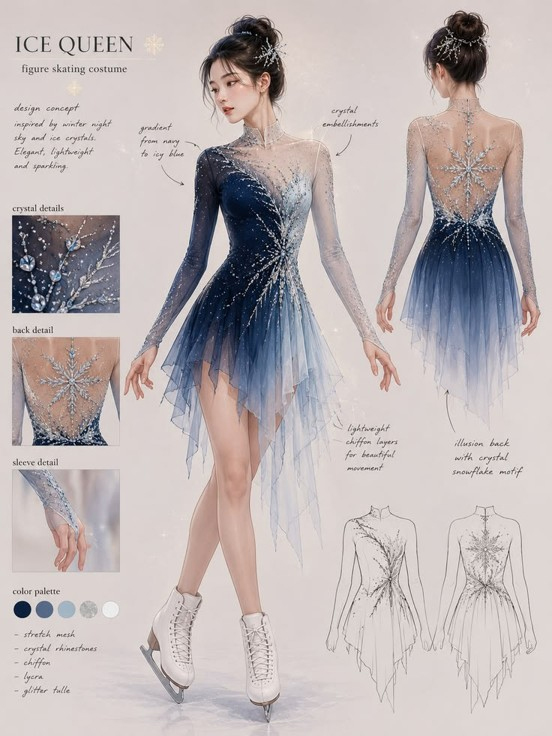
There were many beautiful competitive costumes on display. They were literally “works of art”! There were also many types of fabrics, lace, beads, sequins, rhinestones, feathers, and tassels on display. They were there to get those “creative juices” going for new creations to make spectacular impressions on the ice. Along with the beautiful fabrics and trims, a lot of work goes into each costume all of which add up to an expense of several thousand dollars for each one.
The 2002 Skate America Competition – How It All Started

It all started with Spokane being selected to host the 2002 Skate America competition on October 23 through 27. U.S. Figure Skating announced in 2001 that Spokane was chosen to host the event that was to be held in the Spokane Arena.
Medals were awarded at the event in the disciplines of Men’s and Ladies’ Singles, Pairs skating, and Ice Dancing. Skaters earned points toward qualifying for the 2002-2003 International Skating Union (ISU) Grand Prix Final.
There was a total of 57 senior-level domestic and international skaters that competed in the Skate America competition. There are only senior-level skaters domestic and international skaters that compete in the grand prix series.
The top five finishers in the Skate America competition are awarded prize money; whereas, in the U.S. Figure Skating Championships they are not. Skate America is part of the International Skating Union (ISU) Grand Prix of Figure Skating series that financially rewards skaters based on their final placement. As the national championships do not pay cash, high placement unlocks financial resources indirectly through national team funding and training grants.
Prior to hosting the Skate America competitive event, Spokane had not hosted a major nationally televised figure skating competition. The successful hosting of the event was widely celebrated as Spokane’s first major foray into the sport. It subsequently paved the way for the larger events of the 2007 and 2010 U.S. Figure Skating Championships.
All the Right Stuff
Spokane was selected to host the 2002 Skate America event because the city provided a combination of strong local sports promotion, enthusiastic community support, and the modern, appropriately sized venue of the Spokane Arena.
The choice of Spokane was largely driven by several key factors:
- Aggressive Local Promotion: The local sports promotion company, Star USA, actively promoted and did fundraising to bring major figure skating events to the Pacific Northwest.
- Venue Capabilities: Organizers required a facility with a strong modern infrastructure and the capacity to host international crowds. The Spokane Arena which opened in 1995 fit the logistical requirements perfectly.
- Enthusiastic Attendance: Organizers noted that Spokane was a smaller market where major national and international events produce immense local interest and high ticket sales.
- A History of Successful Hosting: Following the success of the 1998 Memorial Cup and NCAA basketball tournaments, Spokane had already proven it could welcome and accommodate large out-of-town audiences efficiently.
A Great Success in More Ways than One
The 2002 Skate America event brought in 28,664 attendees that generated over $2 million in direct visitor spending. The event shattered previous attendance records and firmly established Spokane as a premier destination for competitive figure skating.
Another distinguishing takeaway from the event was that it had been over 10 years since a woman landed a triple axel in a major competition. That all changed on October 26, 2002, when both Yukari Nakano of Japan and Ludmila Nelidina of Russia, landed clean triple axels in their programs. Including the triple axel jump was important for the advancement of the sport for women.
Key Highlights from the Event
- Record Attendance: The competition drew a record breaking amount of 28,664 tickets sold that set a Skate America event record.
- Star Power and Recovery: Despite a last-minute withdrawal of Olympic champion, Sarah Hughes, due to a knee injury, eight-time U.S. National Champion, Michelle Kwan, stepped in to headline and won the Ladies’ Singles event.
- Community Engagement: The skating events and a Fan Fest were centered in downtown resulting in local business and hospitality revenue.
Long-Term Impact on Spokane
The overwhelming local support and seamless execution of the 2002 Skate America event had a lasting impact on the region’s sports tourism industry:
- It directly paved the way for Spokane to successfully bid on and host the 2007 U.S. Figure Skating Championships.
- It cemented the city’s reputation as “Skate City USA”, helping Spokane secure subsequent high-profile events in the Pacific Northwest.
The 2007 U.S. Figure Skating Championships – Success Builds on Success
The record-breaking success of the 2002 event laid the groundwork for Spokane to be selected to host the 2007 and 2010 U.S. Figure Skating Championships.
Spokane was officially informed on February 20, 2004, it was chosen to host the 2007 U.S. Figure Skating Championships. It secured the event over other bidders such as Boston.
The event was used to determine the U.S. teams for the 2007 World Championships, 2007 Four Continents Championships, and the 2007 World Junior Championships. It was held at the Spokane Arena and the Spokane Convention Center. There was a total of approximately 250 skaters who competed in the novice, junior and senior levels of Men’s, Ladies’, Pairs, and Ice Dancing.
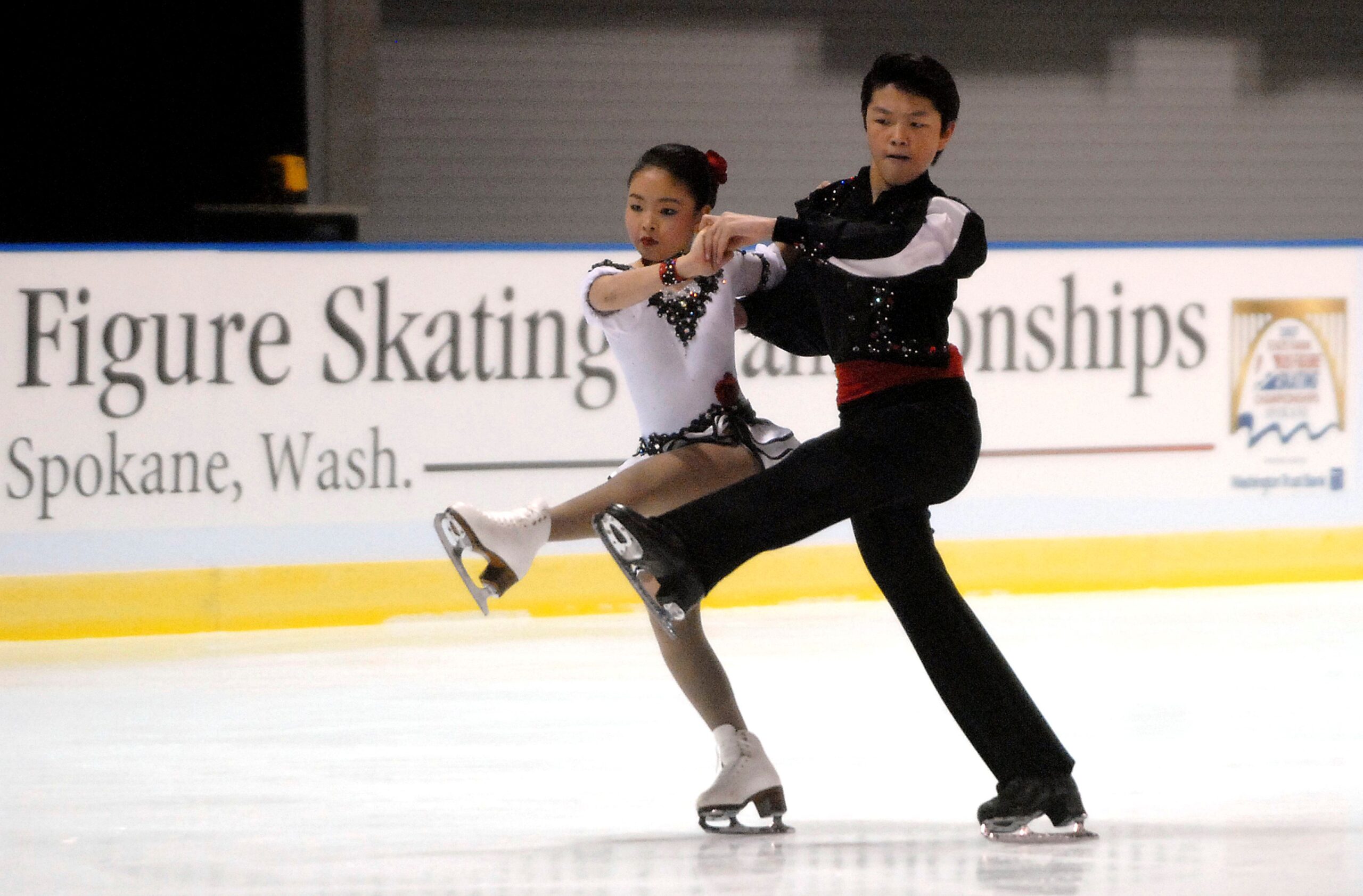
The Spokane Convention Center hosted the novice and junior competitions in the Men’s Singles, Ladies’ Singles, Pairs skating, and Ice Dancing categories. The Fan Fest was also there. It included an interactive area for spectators—a temporary skating rink built inside the center with autograph sessions with skaters and vendor booths.
The decision by U.S. Figure Skating for Spokane to host the 2007 U.S. Figure Skating Championships was based on several key factors:
- Proven Track Record: The city and local organizers successfully hosted the 2002 Skate America international competition which broke attendance records and convinced the Events Advisory Board that Spokane could capably handle a major national event.
- Community Enthusiasm: The organizers demonstrated strong ticket sales proving that the local community would enthusiastically support the event.
- City Georgraphy and Size: Site selectors noted that Spokane was the right-sized city for the event that offered compact logistics where venues and accommodations were close enough for attendees to walk.
- Expanding the Fan Base: U.S. Figure Skating was actively trying to expand its fan base by bringing national championships to vibrant, passionate markets such as Spokane that are outside of major metropolitan areas.
- Praise from the Skating Community: There was continuous praise of “best ever” from those in the skating community with credentials to know. Such praise came from notables such as TV commentator and former world and Olympic champion, Dick Button. There was also local praise from The Spokesman-Review and KXLY-TV.
Spokane was the consummate host showing its friendly nature, helping strangers, encouraging skaters with “heartfelt cheers”, and shining for the national spotlight.
Spokane broke the previous attendance record set by Los Angeles in 2002 of 130,000. Spokane had 154,893 fans attend the week-long competition from January 21 through 28 in 2007 at the Spokane Arena. The event brought in nearly $30 million into the local economy.
Spokane Selected to Host the Prestigious 2010 Championships and Olympic Trials
From its reputation it earned through hosting the 2002 Skate America and the 2007 U.S. Figure Skating Championships, Spokane was awarded the prestigious 2010 U.S. Figure Skating Championships. The event was held at the Spokane Arena from January 14 through 24. Having the chance to host the 2010 U.S. Figure Skating Championships was the “icing on the cake” for Spokane.

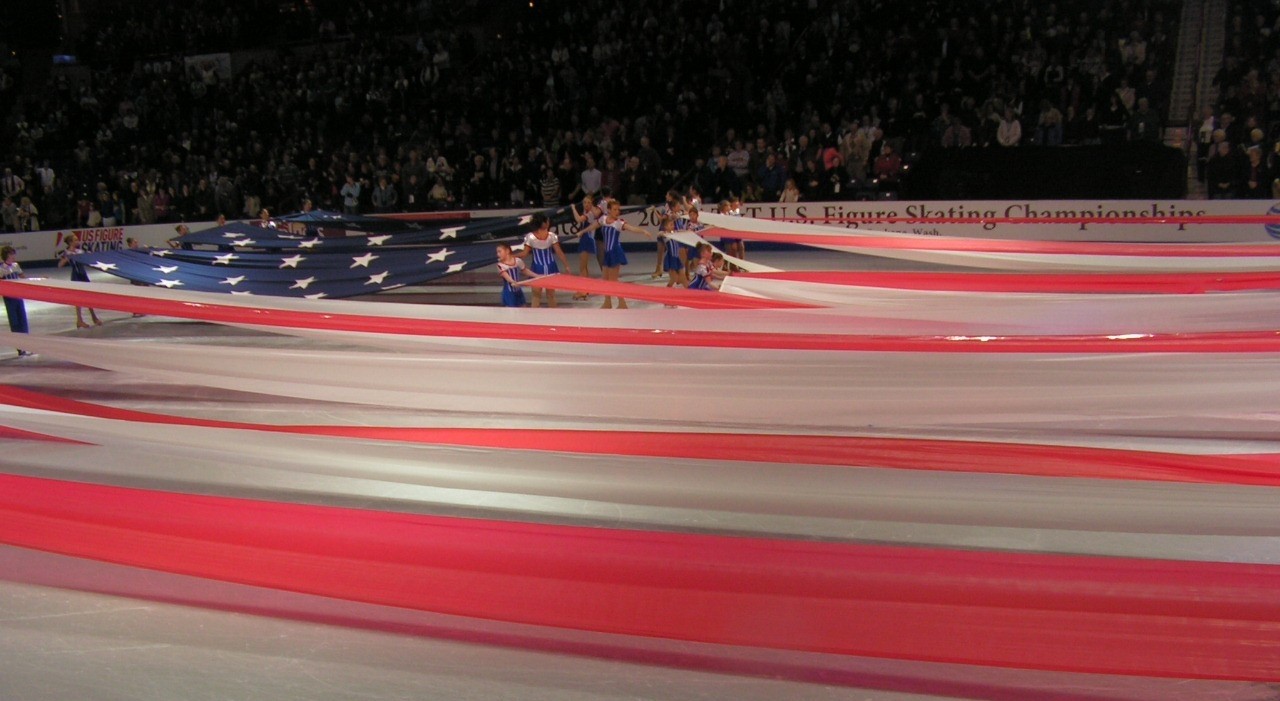
The 2010 championships determined who would be part of the U.S. teams for the World Figure Skating Championships, World Junior Figure Skating Championships, Four Continents Figure Skating Championships, and the Olympic Winter Games.
Spokane was officially informed it would host the 2010 championships on May 5, 2008, by the U.S. Figure Skating Board. Spokane won the bid over competing finalist cities including Portland, Oregon, and Providence, Rhode Island.
Feedback from Bob Dunlop, Senior Director of Events for the U.S. Figure Skating Association, was “our athletes had an unbelievable atmosphere to compete in there”. He said the skaters themselves were some of the biggest advocates for returning to Spokane so soon!
There was a total of approximately 251 skaters who competed in the novice, junior and senior levels of Men’s, Ladies’, Pairs, and Ice Dancing.

Other Action Going on Inside the Area
On breaks between events, I would walk around inside the Spokane Arena. I really enjoyed looking at what all the vendors were selling. From skating boots and blades, competitive outfits and practice attire, collectible items such as pins and jackets, and skating memorabilia—there was a lot to look at!
There were multiple boot and blade vendors with broad selections to choose from depending on the skater’s needs. The proper selection of boots and blades is critical to competitive skating. Having multiple vendors at the championships afforded the skaters and the fans the opportunity for direct comparison to find the right fit which best suited their types of skating and abilities.
The 2002, 2007 and 2010 U.S. Figure Skating Champions
The champions from the 2002 Skate America event were: Brian Joubert (France), Michelle Kwan (United States), Tatiana Totmianina and Maxim Marinin (Russian Pairs), Elena Grushina and Ruslan Goncharov (Ukraine Ice Dancers).
The champions from the 2007 event were: Evan Lysacek (Men’s singles); Kimmie Meissner (Ladies’ singles), Brooke Castile/Benjamin Okolski (Pair’s team), and Tanith Belbin/Ben Agosto (Ice Dancing team).
The champions from the 2010 event were: Jeremy Abbott (Men’s singles); Rachael Flatt (Ladies’ singles); Caydee Denney/Jeremy Barrett (Pair’s team); and Meryl Davis/Charlie White (Ice Dancing team).
Famous Skaters of the Past and Hall of Fame Inductees
By attending the championships, I was also able to see some famous skaters of the past who were the commentators for TV. I can remember seeing Scotty Hamilton, Peggy Fleming, and Dick Button sitting in sectioned-off areas in the arena giving their analyses of the skaters’ performances.
Some former skaters such as Peter Carruthers (1984 Olympic Pairs Silver Medalist) also provided commentary on icenetwork.com radio during the 2010 championships. Small, palm-sized radios and ear buds were handed out to attendees to follow along for added insight.
Famous past skaters could also be seen in the audience such as Kristi Yamaguchi, Dorothy Hamill, and Brian Boitano.
Attending the championships also enabled the public to see the award ceremonies and the United States Hall of Fame Inductees.
In 2007, the inductees were Charles M. Schultz from the famous Peanuts Comic Strip for promoting skating, along with former singles skaters, Paul Wylie, the 1992 Men’s Olympic Silver Medalist; and Janet Gerhauser Carpenter, former Ladies’ Singles and Pairs skater with John Nightingale in 1951/1952.
In 2010, the inductees were Sarah Hughes, 2002 Olympic Champion; and Jenni Meno/Todd Sand, U.S. Pairs champions (1994-1996) and World Champions in 1995, 1996, and 1998.

Why Spokane was Chosen Again to Host the U.S. Figure Skating Championships in 2010
There were several reasons why Spokane was chosen again so quickly after the 2007 champions to host the 2010 event:
- Shattering Attendance Records: In 2007, Spokane drew an all-time record crowd of 154,893 fans proving it could deliver huge ticket sales and pack the Spokane arena.
- Industry Awards: The city’s 2007 execution was so well-regarded that SportsTravel magazine named it both the Sports Event of the Year and Amateur Sporting Event of the Year.
- A “Rock Star” Atmosphere for Skaters: The athletes themselves heavily advocated for returning to Spokane, as it transformed into “Skate City USA” leaving skaters feeling highly celebrated.
- Turnkey Infrastructure: Organizers like Star USA and the staff at the Spokane Arena had just demonstrated they could flawlessly manage the hospitality, transport, and facility logistics required for a premier skating event.
The championships were held strictly at the Spokane Arena in 2010 for the following reasons:
- Sole Competition Venue: The Spokane Arena served as the exclusive venue for all competitive events. This meant all divisions—including the novice and junior events—took place on the main arena ice. This eliminated the logistical complexities and costs of building, maintaining, and staffing a second temporary competitive rink inside the convention center. Also with the cold and icy January weather, having a single venue eliminated the need to travel outside to another venue.
- Equal Opportunity for Novice and Junior Divisions: Moving the novice and junior divisions on to the main arena gave younger competitors the opportunity to skate on the exact same high-profile, Olympic-trial ice as the senior-level athletes.
- Fan Activities Moved: The Fan Fest was also relocated to the downtown shopping district at River Park Square to better capitalize on foot traffic and community engagement.
- The Olympic Broadcast Schedule: Because the 2010 championship was also the U.S. Olympic Selection Trials, the scheduling was tightly built around fixed, live high-definition broadcast windows for NBC Sports and digital streaming.
Centralizing all skating programs into one location made it significantly easier to manage television production infrastructure.
Spokane broke its own previous attendance record set by the 2007 championships of 154,893 tickets sold with 158,170 in 2010. The event brought in $25.7 million into the local economy whereas the 2007 event brought in $30 million. While it might seem counterintuitive since the 2010 event served as the high-stakes Olympic Trials, the overall economic impact differed due to a few key “shifting factors”:
- The 2008 Economic Recession: By the time the January 2010 event arrived, the United States was recovering from a major economic downturn. Travel budgets, corporate sponsorships, and tourist spending habits were significantly tighter than during the pre-recession boom in early 2007.
- Proximity of Attendees: The 2010 event relied heavily on regional fans drawing from the Pacific Northwest who drove to Spokane and spent less on local overnight hotel stays compared to the higher volume of cross-country-fly-in travelers that attended the 2007 championships.
Primary Differences Between the 2007 and 2010 Championships
The primary differences came down to Olympic stakes, attendance numbers, title sponsorship, and broadcast formatting. While both events were huge successes for Spokane, they differed significantly across several structural and institutional areas:
- Olympic v. Non-Olympic Years:
- The 2007 championships served as a standard, non-Olympic national event in which the teams were selected for the annual World Figure Skating Championships and the Four Continents Championships.
- The 2010 championships functioned directly as the U.S. Olympic Selection Trials. The event concluded just 18 days before the start of the 2010 Winter Olympics in Vancouver.
- Attendance Records:
- The 2007 championships shattered the previous all-time U.S. Figure Skating attendance record by selling 154,893 tickets.
- The 2010 championships exceeded the historic record with 158,170 tickets sold over a 10-day span.
- Corporate Title Sponsors:
- The 2007 corporate sponsor was State Farm Insurance in which the event was named the 2007 State Farm U.S. Figure Skating Championships.
- The 2010 corporate sponsor was AT&T in which the event was named the 2010 AT&T U.S. Figure Skating Championships.
- Broadcast Infrastructure:
- The 2007 Broadcast involved network coverage that was split traditionally between ABC Sports and ESPN.
- The 2010 Broadcast was different. Broadcast rights shifted entirely to NBC Sports which provided over 10 hours of live, high-definition television coverage. The novice and junior ice skating divisions also received broadcast coverage through icenetwork.com.
In summary, the accomplishments of Spokane in hosting three skating events are many. Spokane broke national attendance records, earned top industry awards, and delivered an athlete-focused atmosphere. It proved it could manage major skating events with turnkey precision and execute world-class logistics, hospitality, and broadcast coordination at Olympic-trial standards.
Hats Off to the Event Planners
The event planners for the 2007 and 2010 U.S. Figure Skating Championships—led by the local organizing management group Star USA and spearheaded by planners Toby Steward and Barb Beddor—are widely credited with creating a revolutionary, all-encompassing “Skate City USA” atmosphere.
They transformed Spokane, Washington, into a model host city by ensuring that the energy of the competition seamlessly connected both inside and outside the arena doors:
Inside the Events:
- Unprecedented Athlete Support: Planners were credited with generating an unparalleled, electric arena atmosphere inside the Spokane Arena. Packaged seating options kept the stands consistently full, making athletes vocal advocates for bringing the event back to the city in 2010.
- Exceptional Operational Setup: The indoor execution was highly praised by U.S. Figure Skating officials for its pristine ice management, efficient practice rink scheduling, and streamlined technical judging panels.
- Elite Event Status: The indoor operations were so flawless that SportsTravel Magazine awarded the 2007 competition its prestigious “Sports Event of the Year” designation, beating out massive multi-million dollar productions like Super Bowl XLI.
Outside the Events:

- Community-Wide Fan Fest: The organizers are heavily credited with executing an outdoor Fan Fest installation that featured a community entertainment stage, live television broadcasts, and local athlete interviews.
- City-Wide Thematic Immersion: Planners successfully blanketed the entire downtown area in figure skating imagery. Unlike larger traditional host cities where championships could get lost in the noise, Spokane “rolled out the red carpet,” ensuring everyone from hotel staff to local taxi drivers was integrated into the event ecosystem.
- Flawless Transport Logistics: Organizers coordinated an outdoor free shuttle service running every 10 minutes to move thousands of spectators smoothly between the city center hotels, the convention center, and the main venue even in the depths of winter in January.
- Public Legacy Skating: Planners creatively extended the event to the community by leaving the temporary practice rink intact in 2007 for an extra day after the competition, allowing the general public to skate for free on the same ice used by the national champions.
A Good Long-Term Reputation for Hosting the Skating Championships
What a thrill it was for Spokane to host the 2002 Skate America event and the 2007 and 2010 U.S. Figure Skating Championships.
Spokane made a wonderful impression on the organizers of these highly successful events and many happy memories were made! That great reputation will stand Spokane in good stead for future consideration to host such events. I know I will be there again at the next event and hope you will too!
Sources
- “Coming of Age – Again, Our View: Expo ’74, Skating Championships a Milestone”, The Spokesman-Review, January 21, 2007, page 28;
- Jump, Spin, Lift, and Twist, The Spokesman-Review, January 15, 2010, page o7;
- Guide to Figure Skating Jumps, The Spokesman-Review, October 23, 2002, page 15;
- The New Way to Figure, The Spokesman-Review, January 21, 2007, page 104;
- Hilary Kraus, “Skate America Competition Requires Stars to Show Skills on Many Levels”, The Spokesman-Review, October 23, 2002, page 14;
- Barb Beddor, “Spokane and Skating Made a Winning Pair”, The Spokesman-Review, February 17, 2007, page 19;
- Hilary Kraus, “Triple Axels, a Pair”, The Spokesman-Review, October 27, 2002, page 18;
- Wikipedia, 2002 Skate America, accessed July 12, 2026 (https://en.wikipedia.org/wiki/2002_Skate_America);
- Star USA, “Bringing the Word to Spokane”, Skate Magazine, accessed July 12, 2026 (https://skatingmagazine.usfigureskating.org/article/Skating_200208_04);
- A History of Successful Hosting, The 2002 Skate America, Senator Maria Cantwell, accessed July 12, 2026 (https://www.cantwell.senate.gov/news/press-releases/cantwell-in-spokane-to-help-city-secure-world-figure-skating-championships);
- Today in Connecticut History, Figure Skating History, accessed July 12, 2026 (https://todayincthistory.com/2019/03/20/march-20-new-haven-hosts-first-u-s-figure-skating-championships/);
- Why Spokane was Chosen to Host the U.S. Figure Skating Championships Again in 2010, Skate Magazine, (https://skatingmagazine.usfigureskating.org/article/Skating_201003_05);
- Spokane Lands 2010 U.S. Figure Skating Nationals, The Seattle Times, May 6, 2008;
- Why there Weren’t Competitive Skating Events Held at the Spokane Convention Center in 2010, Skate Magazine, accessed July 12, 2026 (https://skatingmagazine.usfigureskating.org/article/Skating_200703_05);
- Wikipedia, 2010 U.S. Figure Skating Championships, accessed July 12, 2026 (https://en.wikipedia.org/wiki/2010_U.S._Figure_Skating_Championships);
- 2010 U.S. Figure Skating Championships: Spokane Proud, Skate Magazine, (https://skatingmagazine.usfigureskating.org/article/Skating_201003_05);
- Wikipedia, U.S. Figure Skating, accessed July 14, 2026 (https://en.wikipedia.org/wiki/U.S._Figure_Skating);
- Wikipedia, 2007 U.S. Figure Skating Championships, accessed July 8, 2026 (https://en.wikipedia.org/wiki/2007_U.S._Figure_Skating_Championships);
- Wikipedia, ISU Judging System, accessed July 9, 2026 (https://en.wikipedia.org/wiki/ISU_Judging_System).
Image Sources
- Featured Image: Opening Ceremonies at the 2010 U.S. Figure Skating Championships at the Spokane Arena, Jim Achtenberg image, accessed July 11, 2026 (https://jachtenberg.com/nationals-2010-spokane/index.html)
- An example of international judging using a 6.0 system, Wikipedia, accessed July 12, 2026 (https://en.wikipedia.org/wiki/6.0_system);
- Judging area at the U.S. Figure Skating Championships in 2010 at the Spokane Arena, The Spokesman-Review; January 21 through 28;
- Keeping score in the guide during the 2007 U.S. Figure Skating Championships Guide, The Spokesman-Review, January 22, 2007, page 8;
- Practice session at the 2010 U.S. Figure Skating Championships at the Spokane Arena, Jim Achtenberg image, accessed July 11, 2026 (https://jachtenberg.com/nationals-2010-spokane/index.html);
- Ice Skating Costume Design, Pinterest, accessed July 11, 2026 (https://in.pinterest.com/pin/1015983997207140308/);
- Qing Pang and Jian Tang Chinese Pairs Skaters at the 2002 Skate America Competition Exhibition, The Spokesman-Review, October 28, 2002, page 2;
- Maia and Alex Shibutani Novice Compulsory Pattern Dance at the 2007 U.S. Figure Skating Championships, The Spokesman-Review Archives, January 21, 2007;
- Opening Ceremonies at the 2010 U.S. Figure Skating Championships in the Spokane Arena, Jim Achtenberg image, accessed July 11, 2026 (https://jachtenberg.com/nationals-2010-spokane/index.html);
- Opening ceremonies with the American Flag at the 2010 U.S. Figure Skating Championships in the Spokane Arena, Jim Achtenberg image, accessed July 11, 2026 (https://jachtenberg.com/nationals-2010-spokane/index.html);
- Caydee Denney and Jeremy Barrett Pairs Short Program at the 2010 U.S. Figure Skating Championships, The Spokesman-Review, January 15, 2010;
- Members of the Ice Skating Hall of Fame at the Championships in 2010, The Spokesman-Review Photo Gallery, accessed on July 10, 2026 (https://www.spokesman.com/galleries/2010/jan/24/figure-skating-exhibition-champions/);
- Shuttle Bus Map Route during the U.S. Figure Skating Championships 2007, The Spokesman-Review, January 21 through 28.